
E-Bike Controllers Explained: 48V vs 72V+, Amps & FOC
E-Bike Controllers Explained: 48V vs 72V+, Amps & FOC
The part that turns battery power into speed — and why it matters more than the motor
The controller is the single most underrated component on a high-power e-bike. It's the box that decides how much of your battery's power actually reaches the motor, how smoothly that power gets delivered, and ultimately how the bike feels to ride. Two bikes with the identical motor and battery can perform completely differently depending on the controller between them. Here's what actually matters when you're comparing controllers: voltage class, amperage, and the control algorithm running the show.
Voltage Class: 48V vs 72V+
Voltage is the foundation of a controller's power ceiling. A 48V system is the entry point for e-bike power — common on commuter and lower-power builds, capable of solid performance but limited in overall wattage without pushing amperage (and heat) to extremes. Once you move into 72V and higher — the territory HPC's performance platforms live in — you get dramatically more headroom to make power efficiently, because power is voltage multiplied by current. Higher voltage means the controller and motor can produce serious wattage without needing to push punishing amounts of current through the wiring, connectors, and windings.
| Voltage Class | Typical Use Case | Power Ceiling |
|---|---|---|
| 48V | Commuter / entry-level performance | Lower — more current needed for equivalent power |
| 72V | High-power performance builds | Mid-to-high, efficient power delivery |
| 78V–90V+ | HPC flagship / halo builds | Highest — five-figure wattage with manageable current |
Amps: The Other Half of the Power Equation
Current, measured in amps, is the second variable in the power equation. A controller's amperage rating tells you how much current it can push — both from the battery (battery current) and through the motor phase wires (phase current). Phase current is usually the bigger number, since it's what actually drives torque at the motor. A controller with a high phase-current rating can deliver strong low-end torque and hard acceleration, while battery current limits are more about how fast you're allowed to drain the pack.
Why Two Amp Ratings Matter
Phase current determines how hard the motor can be driven instantaneously — this is what you feel as punch off the line. Battery current determines how much load the battery pack sees continuously. A well-matched controller balances both so you get strong acceleration without overstressing the battery.
FOC: Field-Oriented Control
Field-Oriented Control, or FOC, is the algorithm modern high-performance controllers use to manage how current is delivered to the motor's windings. Instead of switching power on and off in blunt steps like older square-wave (trapezoidal) controllers, FOC continuously calculates the precise current vector needed at every instant, delivering smooth, sine-wave power. The result is quieter operation, less wasted heat, more efficient use of battery energy, and noticeably smoother throttle response — especially at low speed and during hard acceleration, where a poorly controlled motor can feel jerky or cog.
★ What FOC Delivers in the Real World
- Smoother acceleration with no cogging or jerkiness off the line
- Higher efficiency, translating to better real-world range from the same battery
- Quieter motor operation compared to trapezoidal control
- Better thermal management under sustained high-power loads
HPC's Controller of Choice: Nucular
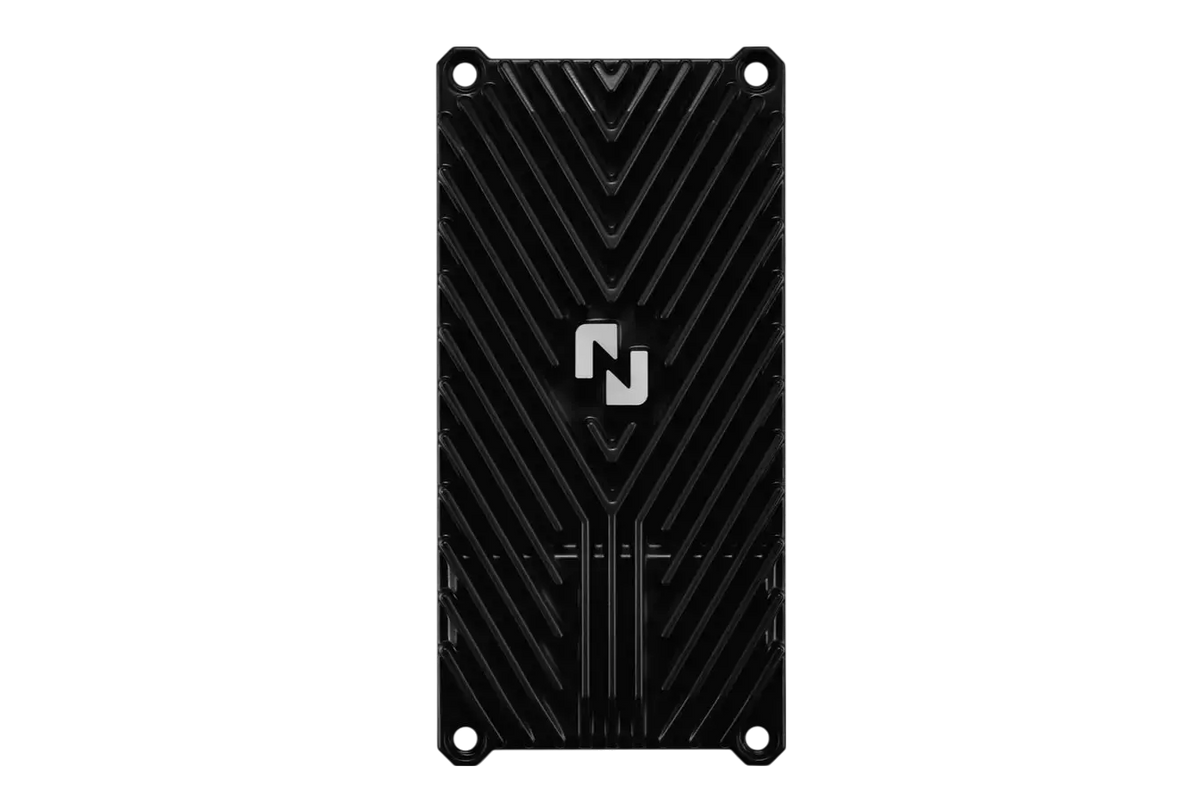
HPC builds every high-power platform around Nucular controllers, tuned in-house for each specific bike and motor combination. The flagship Nucular P24F is a DC Sine Wave / FOC controller rated for up to 27kW of maximum power, with a 500A maximum phase current rating and 350A maximum battery current, and compatibility across a wide 48V–90V voltage range. That headroom is exactly why it's the controller behind HPC's highest-output builds: it has the current capacity to make real power at high voltage without being the bottleneck.
| Nucular P24F Spec | Detail |
|---|---|
| Max Power | 27kW |
| Max Phase Current | 500A |
| Max Battery Current | 350A |
| Voltage Range | 48V–90V |
| Control Type | DC Sine Wave / Field-Oriented Control (FOC) |
We standardize on Nucular because it consistently outperforms the alternatives we've tested at the voltage and current levels our bikes run at — every HPC controller integration, from tuning to thermal management, is built specifically around what these units can do.
Matching a Controller to Your Riding Style
The right controller setup depends on what you're actually doing with the bike. A rider who wants smooth, efficient commuting mileage benefits most from a well-tuned FOC controller running conservative current limits — prioritizing range and smoothness over outright punch. A rider chasing maximum acceleration and top speed wants higher phase current headroom and a controller tuned to use it, paired with a battery pack that can sustain the draw. This is why HPC tunes each Nucular controller specifically for the bike it's installed in, rather than shipping one generic configuration across the whole lineup — the same hardware can be tuned very differently for a commuter-oriented build versus a flagship performance platform.
Reading a Controller Spec Sheet Like a Pro
When you're comparing controllers across brands, three numbers tell you almost everything: peak phase current, continuous battery current, and voltage range. Peak phase current is a burst number — it tells you what the controller can deliver for a few seconds of hard acceleration, not what it sustains indefinitely. Continuous battery current is a better indicator of real-world thermal performance, since it reflects what the controller and battery can handle without overheating on a long climb or extended high-speed run. Voltage range matters because a controller rated for a narrow band won't have the headroom to grow with you if you upgrade your battery pack down the line. A controller like the Nucular P24F, with its wide 48V–90V range, gives a platform room to scale from a 72V build up toward the 78V–90V territory HPC's flagship bikes run in.
Heat: The Hidden Limiter on Every Controller
Every controller spec sheet lists an eye-catching peak power number, but heat is what actually determines how much of that number you can use in the real world. Current flowing through MOSFETs and windings generates heat, and heat is the enemy of both performance and longevity — a controller running hot will throttle its own output to protect itself, meaning a bike that felt powerful for the first thirty seconds can go noticeably softer on a long climb. This is why the raw peak-power number on a spec sheet matters less than how well the controller and its housing are designed to shed heat under sustained load.
This is also where FOC pulls its weight twice over. Because it delivers current more precisely than a trapezoidal controller, an FOC unit generates less wasted heat for the same output, which means it can sustain higher continuous power before it needs to throttle back. It's part of why HPC's Nucular-based builds hold their performance on long climbs and extended high-speed runs rather than fading the way a cheaper, less efficient controller setup would.
Common Controller Myths, Debunked
A few misconceptions come up constantly when riders start comparing controllers. First: bigger peak-amp numbers don't automatically mean a faster bike — a controller's real-world output is capped by what the motor, battery, and wiring around it can actually handle, so an oversized controller paired with an undersized battery won't deliver on its spec sheet. Second: higher voltage alone isn't inherently dangerous or fragile — a properly engineered 72V or 90V system, like the ones HPC builds, is just as reliable as a 48V system when the surrounding components are rated to match. Third: FOC isn't just a marketing term — the difference in ride smoothness between a sine-wave FOC controller and a basic trapezoidal one is immediately noticeable the first time you twist the throttle.
Is a 72V controller better than a 48V controller?
For high-power builds, yes. Higher voltage lets you produce more wattage without pushing extreme current through the system, which generally means more efficient, cooler-running power delivery.
What does FOC actually change about how the bike rides?
FOC delivers smooth, continuously-calculated sine-wave current instead of blunt on/off switching, which translates to smoother throttle response, less noise, and better efficiency — especially noticeable at low speed and under hard acceleration.
Which controller does HPC use?
HPC builds its high-power platforms around Nucular controllers, including the flagship P24F rated for 27kW, 500A max phase current, and 48V–90V compatibility, tuned in-house for each bike.
Power Delivery That Matches Your Build
HPC-tuned Nucular controllers, engineered for smooth, efficient, high-current performance.
Shop HPC Controllers →
Comments