
E-Bike Displays & the Cycle Analyst: Reading Real Power
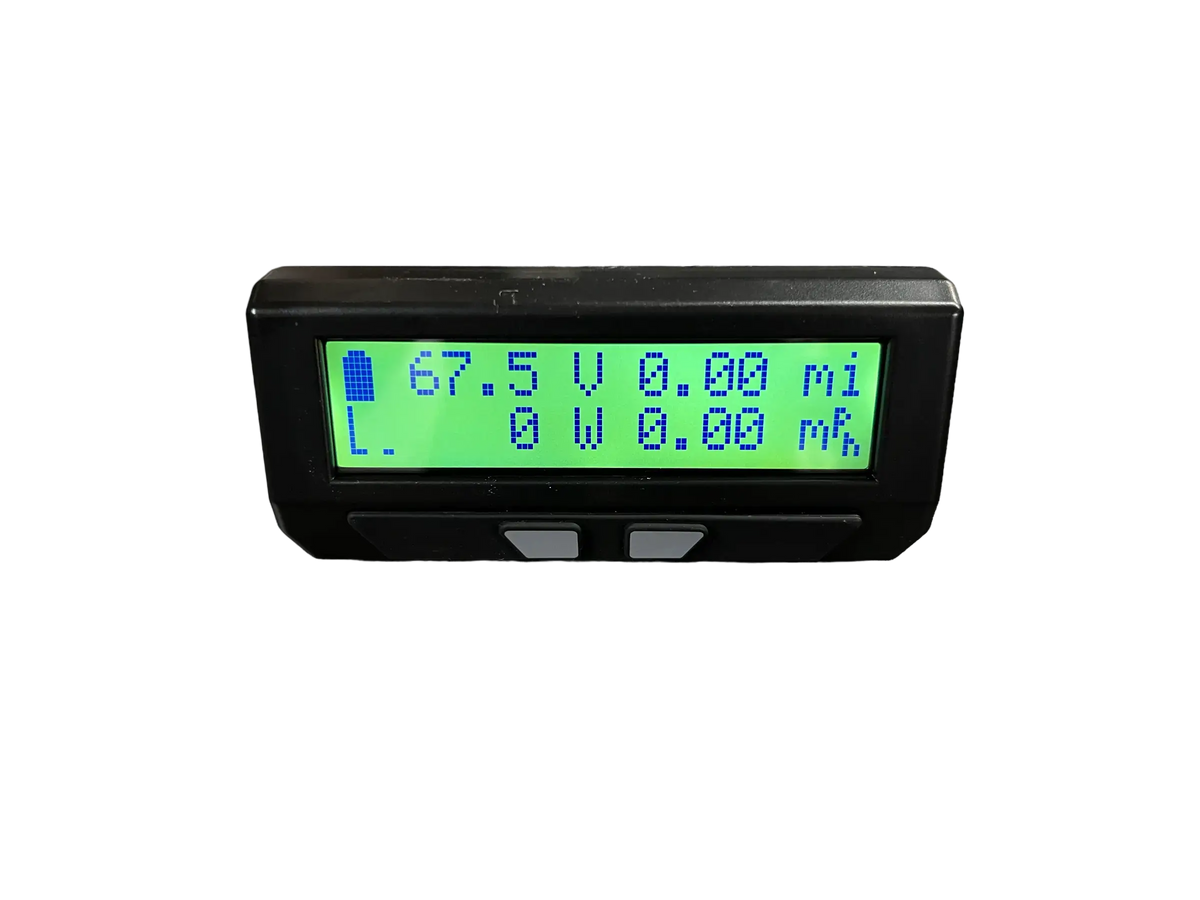
On a high-power e-bike, your display is the dashboard that tells you what your system is really doing. The difference between a basic readout and a true telemetry unit like the Grin Cycle Analyst is the difference between guessing and knowing. This guide explains what the key numbers mean — volts, amps, watts, and amp-hours — and how to choose the right display for a serious build.
The four numbers that matter
- Volts (V): Your battery's state of charge and system voltage. Watching voltage sag under load tells you how hard the pack is working and warns you before you run it too low.
- Amps (A): The current flowing to the motor right now — essentially your real-time “throttle” demand. Peak amps drive acceleration and heat.
- Watts (W): Volts times amps — your actual power output at that instant. This is the honest measure of how much the bike is producing, far more useful than any sticker rating.
- Amp-hours (Ah) / watt-hours (Wh): Energy consumed and remaining — the key to understanding true range on a given ride.
Why the Grin Cycle Analyst is a builder favorite
The Grin Technologies Cycle Analyst has been the reference telemetry unit for high-power e-bikes for years. It shows real-time volts, amps, watts, speed, and consumed amp-hours, and it can even provide adjustable current and speed limiting. For anyone tuning or troubleshooting a powerful build, that live data is invaluable — you can see exactly how much power you're pulling and how your battery is holding up.
HPC offers a Cycle Analyst V3 display with custom firmware and plug-and-play connectors built specifically for Revolution and Revolution X systems.
Integrated displays: Nucular and beyond
Not every build uses a Cycle Analyst. Modern controller ecosystems often pair with their own smart displays. The Nucular on-board computer, for example, doubles as both a rich display and the interface you use to program your controller — ideal for the highest-power builds. Choosing a display is really about choosing an ecosystem: the display, the controller, and the motor need to speak the same language.
How to choose the right display
- Match your controller. Your controller platform largely dictates which displays are compatible. Start there.
- Decide how much data you want. Casual riders may be happy with speed and battery percentage; builders and tuners want full volts/amps/watts telemetry.
- Consider programmability. Displays like the Nucular and Cycle Analyst let you adjust limits and tune behavior, not just read numbers.
- Think about visibility. A high-contrast screen that's readable in direct sunlight makes a real difference on long rides.
Read your bike, ride smarter
Once you can see real watts and amp-hours, you ride differently — managing your battery, understanding your true range, and catching problems before they become roadside failures. A good display turns a fast e-bike into a fully understood machine.
Browse HPC e-bike displays to find the right readout for your build.
Comments