
The Most Powerful Electric Bikes: How Many Watts You Really Need
“How many watts do I need?” is one of the most common questions we hear at Hi Power Cycles — and one of the most misunderstood. Wattage numbers get thrown around loosely in the e-bike world, and a “1,000W” bike from one brand can out-accelerate a “3,000W” bike from another. This guide breaks down what watts actually measure, the difference between nominal and peak power, why voltage matters more than most buyers realize, and how to match real-world power to your terrain and goals.
Nominal watts vs. peak watts
Every e-bike motor carries two very different power numbers. Nominal (continuous) power is what a motor can sustain indefinitely without overheating. Peak power is the short burst a motor can deliver for acceleration, steep climbs, or passing. A motor rated 1,500W nominal might peak at 4,000W+ for short stretches.
Marketing usually quotes whichever number sounds bigger, which is why comparing bikes on a single “watt” figure is misleading. What you actually feel on the trail is the combination of peak power, torque, and how long the system can hold that output before thermal limits force it to back off.
Why voltage is the real story
Power equals volts times amps. That means a higher-voltage battery can deliver more power without pushing damaging amperage through the controller and motor. This is exactly why HPC builds around high-voltage systems: our 86V battery systems let our bikes make serious sustained power while staying efficient and cool.
A 48V bike and an 86V bike can both claim “high wattage,” but the higher-voltage platform holds that power longer, runs cooler, and delivers a cleaner, more responsive throttle. When you're evaluating powerful e-bikes, ask about the system voltage — not just the headline watt number.
How much power do you actually need?
More watts aren't automatically better; the right amount depends on how and where you ride. Keep in mind that California's e-bike classes cap at 750W and 28 mph, and under SB 1271 (effective January 1, 2025) a bike capable of more than 28 mph is not an e-bike. HPC classifies its high-power models as Off-Road Only High Power Bikes for OHV areas, private property, and closed courses, so check your local regulations before you ride.
- 1,500–3,000W: Plenty for spirited off-road and private-land riding and moderate trails. Quick, efficient, and easy to live with.
- 3,000–5,000W: Strong hill-climbing and off-road capability with authoritative acceleration — the sweet spot for aggressive all-around riders.
- 5,000–8,000W+: Maximum performance for steep terrain, high top speeds, and riders who want no-compromise power. This is HPC's specialty.
HPC's high-power builds
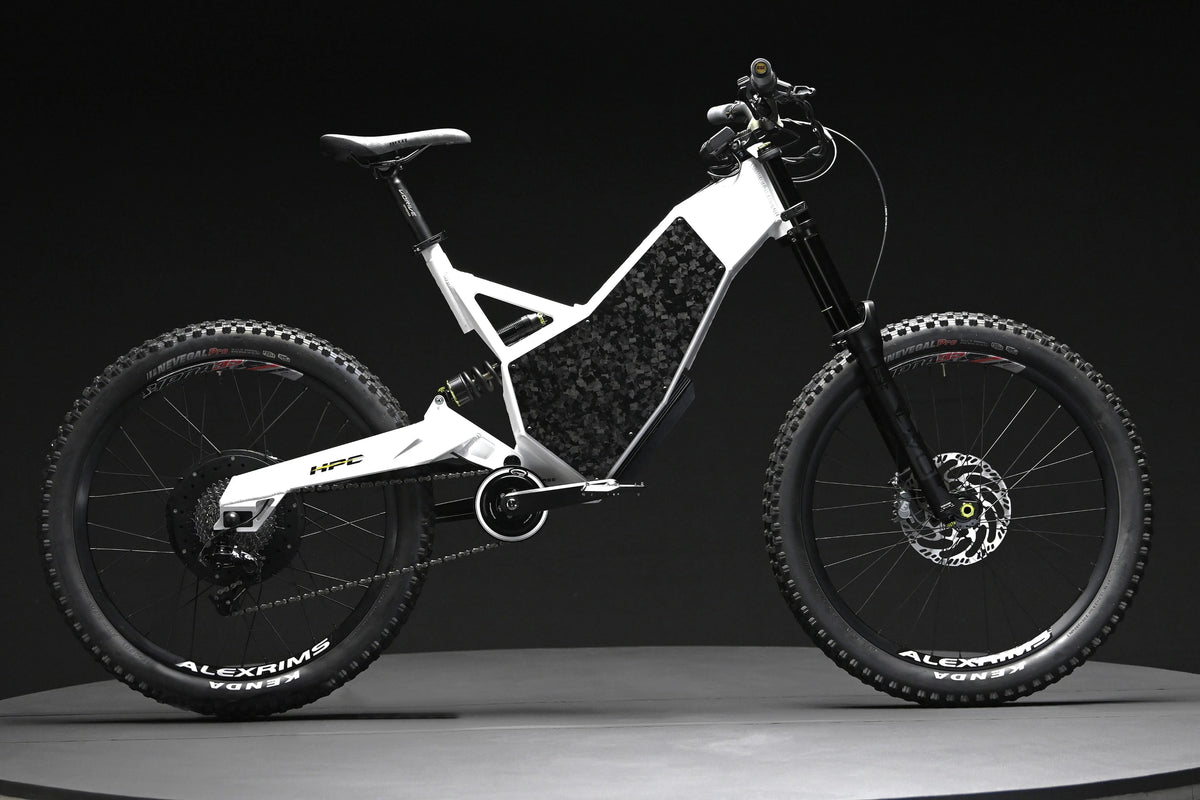
If you're chasing the top of the power curve, a few HPC machines stand out. The Revolution MX Pro is a lightweight, 78V downhill e-MTB that makes up to 6,000W with a 100-mile range and roughly a 50 mph top speed — all hand-built in the USA. For the ultimate expression of power, the Revolution XX is the fastest, most powerful bike we've ever produced.
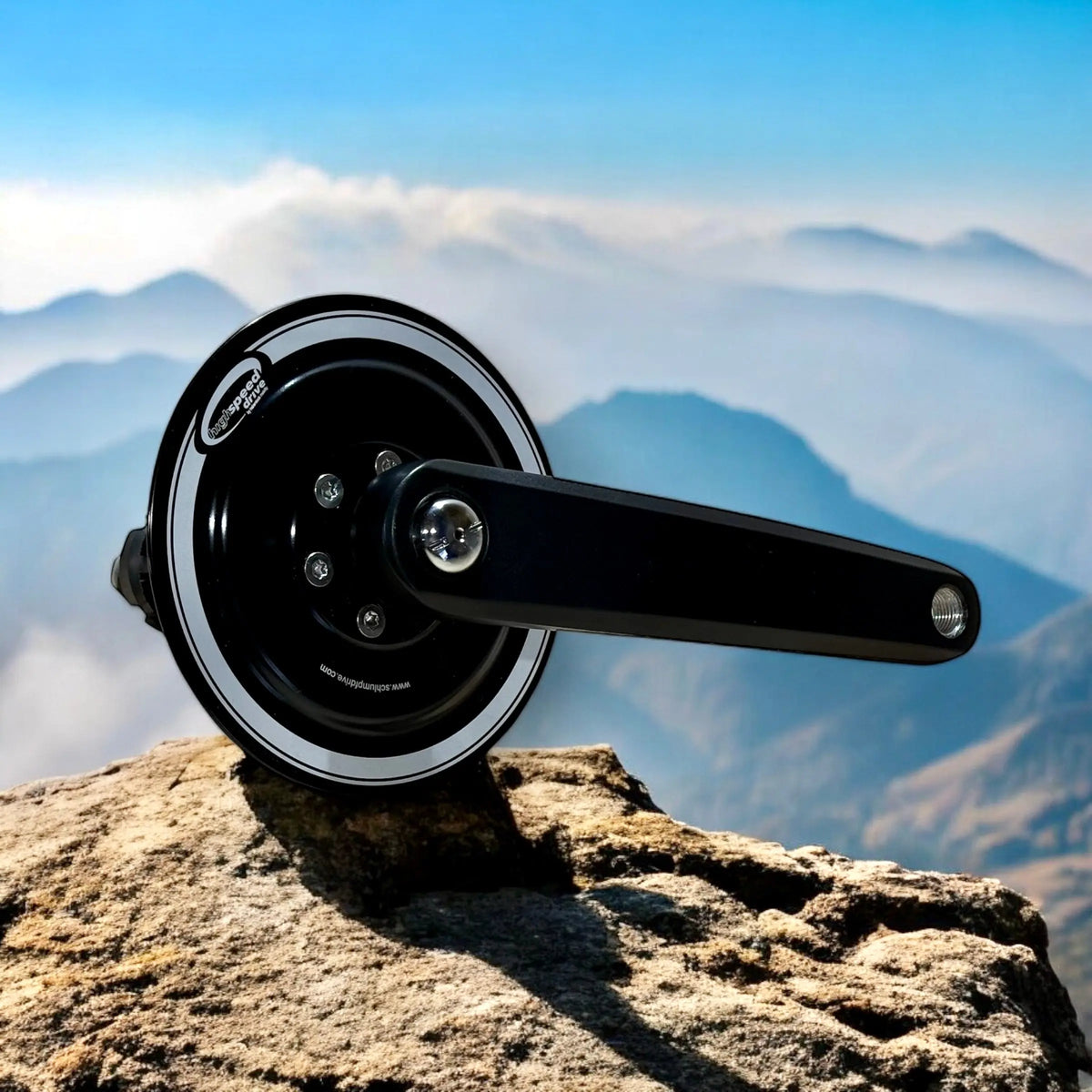
Prefer to build your own high-power machine? Our gearless Black Lightning hub motor delivers up to 8kW with remarkably low cogging torque, turning a capable frame into a true high-power e-bike.
Power is nothing without the supporting cast
Raw watts only translate to real-world performance when the rest of the bike can handle them. High-power builds demand a battery that can deliver the current, a controller tuned to the motor, brakes sized for the speed, and a frame and suspension built for the loads. That systems-level engineering — not a single spec — is what separates a genuinely powerful e-bike from a number on a page.
The bottom line
Don't shop on watts alone. Look at nominal and peak power, pay attention to system voltage, and match the platform to your terrain. For most riders, 3,000–5,000W is more than enough; for those who want it all, HPC's 5,000–8,000W+ builds are in a class of their own.
Shop HPC's high-power electric bikes or explore the full Revolution lineup to find the right amount of power for your ride.

Comments