
E-Bike Spring Maintenance Checklist: 8 Things to Do Before Your First Ride

Spring E-Bike
Maintenance Checklist
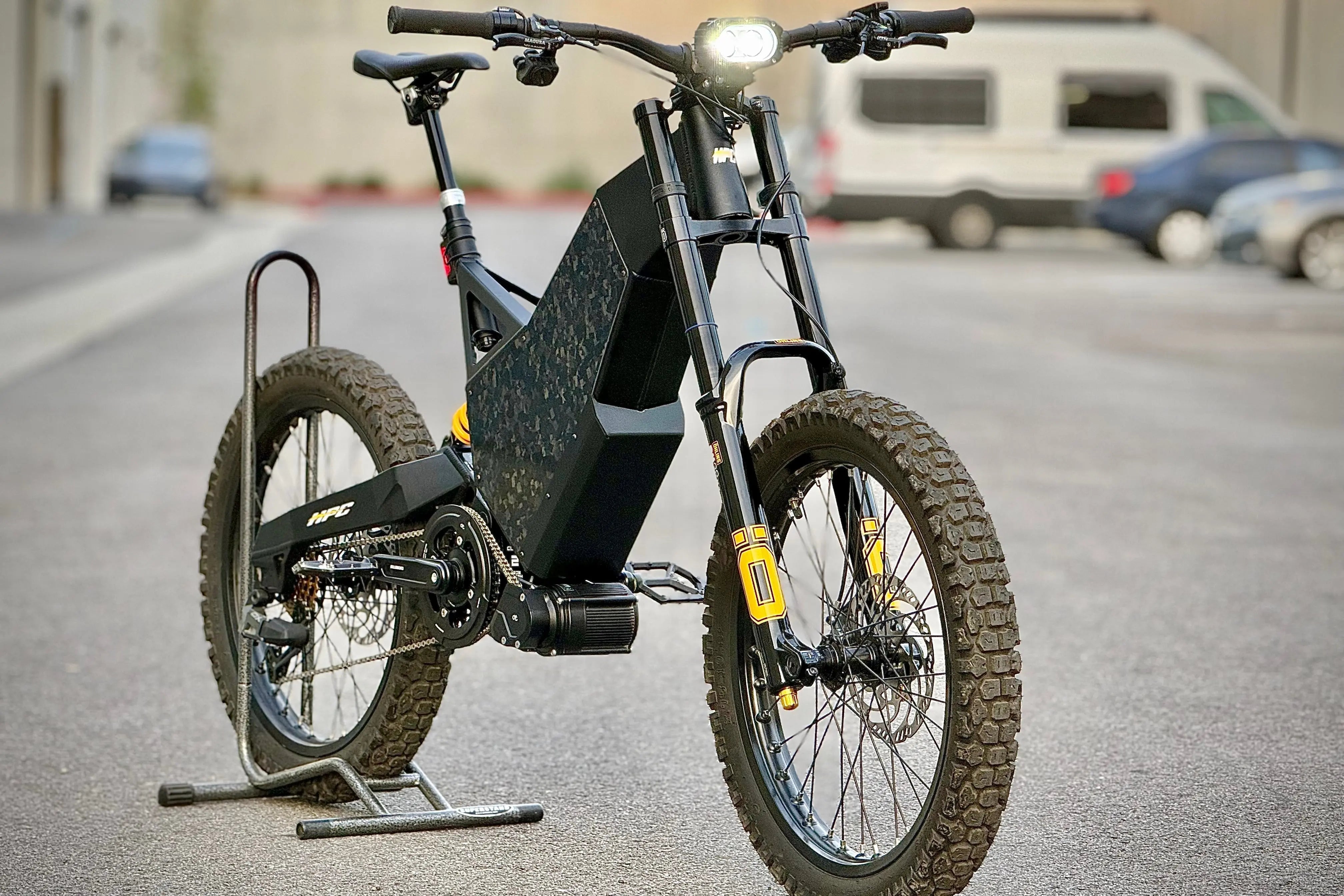
The days are getting longer, the trails are drying out, and riding season is officially here. Before you throw a leg over your HPC and pin the throttle, take an hour to run through this spring maintenance checklist. A few minutes of attention now can prevent a mechanical on the trail, protect expensive components, and make sure your bike is running at full performance from day one.
This checklist is written specifically for high-performance HPC electric bikes — the Revolution, Revolution MX, Trailblazer, Trailblazer Pro, Trailblazer AT, Scout, and Titan. These are not your average e-bikes, and they deserve maintenance to match.
Battery: First Stop,
Every Season
Your battery is the heart of the bike. If it spent the winter in storage, the first thing you need to do is check its state of charge and give it a proper refresh.
- Check the charge level on the display. If you stored it properly at 50–60%, charge it back up to 80–90% before your first ride.
- Inspect the battery housing for any cracks, swelling, or damage. If the pack looks puffy or distorted at all, do not charge it — contact HPC support immediately.
- Clean the battery connector pins with a dry cloth. Look for corrosion, bent pins, or debris that could cause a poor connection.
- Reattach the battery firmly and make sure it clicks or locks into place securely.
- Perform a full charge cycle using your HPC-supplied charger or Cycle Satiator, and confirm the charge completes normally with no error codes.
Brakes: Don't
Skip This One
High-power e-bikes generate serious speed, and that means brakes are mission-critical. HPC bikes come equipped with premium Magura brakes — the MT5, MT7, or Gustav Pro depending on your model — and they need seasonal attention just like everything else.
- Squeeze each brake lever and feel for firmness. A spongy lever usually means air in the hydraulic line — this needs to be bled before you ride.
- Inspect brake pads for wear. If the pad material is worn thin (less than ~1.5mm), replace them before riding.
- Check brake rotors for warping by spinning each wheel and watching for wobble as the rotor passes through the caliper.
- Look at the rotors for deep grooves or scoring from worn pads. Light surface rust from winter storage is normal and will clear up after a few brake applications.
- Check that both calipers are centered on the rotor — the pads should have equal clearance on both sides.
- Inspect brake hose routing for kinks, abrasion wear, or pinching against the frame.
Drivetrain: Chain,
Cassette & Motor
A neglected drivetrain is the fastest way to eat through expensive components. A clean, well-lubricated chain runs quieter, shifts better, and lasts significantly longer.
- Clean the chain with a dedicated chain cleaner or degreaser. Winter riding pushes grit deep into the rollers.
- Measure chain wear with a chain checker tool. Most chains should be replaced at or before 0.75% stretch. Running a worn chain destroys cassette teeth fast.
- Inspect the cassette for shark-fin wear on the teeth. If the teeth look pointed rather than flat-topped, replace both chain and cassette together.
- Clean and inspect the chainring for worn or chipped teeth.
- For mid-drive bikes (Revolution MX, Trailblazer, Trailblazer AT, Scout): inspect the motor interface and bash guard for any damage from off-road impacts.
- For hub motor bikes (Revolution): spin the rear wheel and listen for any grinding or roughness from the motor — a sign to check in with HPC.
- Apply a quality wet or dry lube (based on your riding conditions) after cleaning. Wipe off excess.
Suspension: Dial It In
for the Season
HPC bikes run premium suspension — DVO Onyx forks, DVO Jade coil shocks, EXT VAIA forks, and Öhlins on select Trailblazer Pro builds. After a winter of sitting, suspension needs to be inspected and set up properly for your weight and riding style.
- Check fork and shock seals for oil residue or leaking. A small amount of thin film is normal; visible drips or heavy buildup is not.
- Wipe down fork stanchions with a clean cloth — remove any dried dirt or residue that could score the seals on the next compression.
- Check fork and shock air pressure using a proper suspension pump (if applicable). Pressures drop over winter — refer to your DVO or EXT setup guide. For recommended settings by rider weight, visit the HPC support page.
- Inspect the rear shock linkage hardware for any loose bolts. Pivot bolts on full-suspension bikes should be torqued to spec at the start of every season.
- Cycle the fork through its travel a few times to redistribute oil in the lower legs.
- Check rebound and compression clickers — if you changed settings during a wet fall ride, now's the time to reset to your baseline tune.
Tires & Wheels
Tires deteriorate in storage — rubber hardens, tires lose pressure, and tubeless setups can dry out. Check them before you count on them.
- Inflate tires to the correct pressure. HPC fat tires typically run 8–15 PSI depending on terrain; standard MTB tires run 20–35 PSI. Adjust for your rider weight and conditions.
- Inspect tires for cracks in the sidewall, cuts, or bulges. Winter storage in extreme cold can cause rubber to develop micro-cracks.
- Check tread depth and pattern — if the knobs are worn flat, you'll lose cornering grip and braking traction.
- For tubeless setups: remove the valve and shake the wheel to confirm there's still liquid sealant inside. Sealant dries out in 4–6 months. Add fresh sealant if needed before riding.
- Check wheel trueness by spinning each wheel and watching the rim at the brake caliper or a fixed reference point. A significant hop or wobble means truing is needed.
- Grab each wheel at the 3 and 9 o'clock positions and check for lateral play in the bearings. Any movement indicates hub bearings that need attention.
Electrical System
High-performance e-bikes have complex electrical systems. Spring is the right time to do a thorough once-over before committing to long rides far from home.
- Power on the bike and confirm the display boots correctly with no error codes.
- Check all power levels and confirm throttle response is smooth and consistent across all assist modes.
- Inspect all wiring harnesses for chafing, cracking, or pinch points against the frame — pay extra attention anywhere a cable runs near a moving suspension pivot.
- Check the throttle (if equipped) for smooth return to zero when released. Any sticking or resistance is a safety issue that needs to be resolved before riding.
- Test all lights if your bike is equipped with HPC's integrated lighting system. Check connections at the light and at the main harness.
- For Nucular controller builds: power on and review the display for any logged fault codes from winter storage.
- Check all connector junctions (XT60, Anderson, bullet connectors) for signs of heat discoloration or corrosion. Reseat connections that appear oxidized.
Frame, Bolts
& Fasteners
Vibration, impacts, and temperature cycling loosen fasteners over time. A spring torque check takes 15 minutes and can prevent a catastrophic failure on the trail.
- Check stem bolts and handlebar clamp bolts. Torque to spec (typically 5–6 Nm for carbon bars, 8–10 Nm for alloy).
- Check the seatpost clamp and confirm it's secure.
- Inspect the dropper post (if equipped) for smooth actuation and no sticking.
- Check all brake caliper mounting bolts.
- Inspect rear shock mounting hardware and linkage pivot bolts.
- Check motor mount bolts on mid-drive builds.
- Visually inspect the frame for any new cracks or paint damage — particularly around the head tube, bottom bracket, and rear triangle welds. The USA-made 6061-T6 aluminum on HPC Revolution frames is tough, but weld inspections are good practice annually.
Cockpit & Controls
- Check bar ends are tightly plugged — open ends on a fall can cause serious injury.
- Inspect grips for slipping or deterioration. Replace if worn.
- Test the display mount — it should be firm with no rotation under hard braking.
- Check lever reach adjustments on your Magura brakes and reset to your preferred position.
- Confirm the Schlumpf High Speed Drive (Revolution owners) shifts cleanly with a heel tap in both directions. If engagement feels sluggish, it may need service.
Quick Reference Checklist
Screenshot or print this for the garage
- Charge level checked and refreshed
- Housing inspected — no swelling or damage
- Connector pins clean and seated
- Full charge cycle completed successfully
- Lever feel firm — no spongy hydraulics
- Pad thickness checked
- Rotors inspected — no warping or scoring
- Caliper alignment confirmed
- Chain cleaned and measured for wear
- Cassette inspected
- Lubrication applied
- Motor inspected for noise or damage
- Seals checked — no leaking
- Stanchions cleaned
- Air pressure set (if applicable)
- Linkage bolts torqued
- Pressure set correctly
- Tread and sidewall inspected
- Tubeless sealant refreshed if needed
- Wheels true — no bearing play
- No error codes on display
- All assist levels and throttle tested
- Wiring inspected for chafing
- All connectors seated and clean
- Stem and bar bolts torqued
- Brake caliper bolts checked
- Frame visually inspected — no new cracks
- Bar ends plugged securely
- Grips inspected — no slipping
- Display mount firm
- Lever reach set
Ride Season Starts Now
A well-maintained HPC bike is a bike that performs at 100% every ride. If you find something that needs professional attention — a brake bleed, suspension service, motor inspection, or anything you're unsure about — reach out to our team directly.
We've been building and servicing high-performance electric bikes for over 17 years. We'd rather answer a question than have you diagnose a problem on the trail.
Need parts? Shop USA-made HPC battery systems, Magura brake components, and all parts & accessories at hpcbikes.com.
Contact HPC Support
Comments