
Best Downhill & Enduro E-Bikes: 2026 High-Power eMTB Guide
Best Downhill & Enduro E-Bikes: 2026 High-Power eMTB Guide
Two very different builds for riders who take their trails seriously
Downhill and enduro riding put different demands on a bike than trail riding or commuting — big hits, sustained braking, and the need for a motor and battery that don't fade halfway down the mountain. HPC builds two distinct answers to that demand: the Revolution MX, a purpose-built downhill e-MTB, and the Trailblazer Pro, a full-carbon enduro platform built to climb as well as it descends. Here's how each one is built, and which one fits your riding.
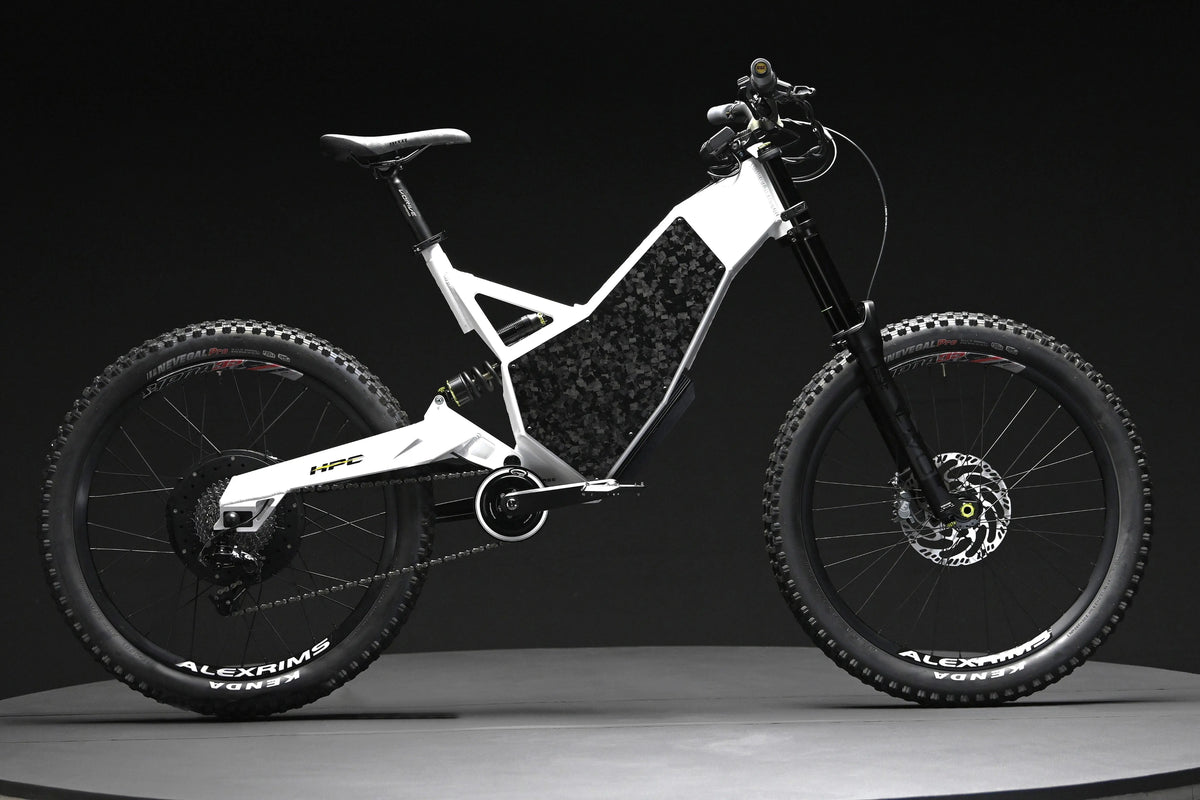
Revolution MX: Built for Downhill
The Revolution MX is the lightest, most powerful 72V downhill e-MTB HPC makes — and it's built in the USA from the ground up for one job: getting you down the mountain as fast and as controlled as possible. It puts out up to 6,000W of power, delivers a 50 mph top speed, and offers up to 100 miles of range, all in a chassis engineered specifically around downhill geometry and suspension demands rather than adapted from a general-purpose trail bike.
| Revolution MX Spec | Detail |
|---|---|
| Max Power | 6,000W |
| Top Speed | 50 MPH |
| Max Range | Up to 100 miles |
| Voltage | 72V (78V on Revolution MX Pro) |
| Max Torque | 270 Nm (dyno-verified, at the wheel) |
| Price | $10,500 ($12,500 for MX Pro) |
That 270 Nm of dyno-verified torque at the wheel is what actually matters on a downhill run — it's the number that determines how the bike responds when you need to power out of a rock garden or claw back speed after a tight switchback, not just how fast it goes in a straight line. For riders who want the same platform with more voltage headroom, the Revolution MX Pro steps up to a 78V system at the same power and speed figures, for $12,500.
Trailblazer Pro: Built for Enduro
Where the Revolution MX is a downhill specialist, the Trailblazer Pro is an enduro all-rounder — a handbuilt, full-carbon, full-suspension e-bike assembled in the USA and built to climb under its own power just as capably as it descends. It ships with a factory-tuned DVO Onyx 38SL fork and DVO Topaz PRIME rear shock (tuned to the individual rider's weight and style), with an Öhlins RXF38 m.3 fork and Öhlins TTX2 air shock available for riders who want even more control on fast, technical descents.
| Trailblazer Pro Spec | Detail |
|---|---|
| Power Options | 750W Class 1 / 1200W / 2000W full-power (38–40 mph) |
| Suspension | DVO Onyx 38SL / DVO Topaz PRIME (Öhlins upgrade available) |
| Battery | USA-made 21700 packs, 10Ah (25mi) up to 20.25Ah (52mi) |
| Drivetrain | Standard, SRAM Transmission XX wireless, or Rohloff 14-speed hub |
| Price | $13,000 |
The Trailblazer Pro's torque-sensing pedal assist gives it a natural, bike-like feel for the climbs, while the on-demand thumb throttle puts instant power at your fingertips when you need it — a combination that makes it genuinely capable of pedaling itself back to the top of the trail rather than requiring a shuttle.
Downhill vs. Enduro: What's the Real Difference?
Downhill riding is about descending as fast and controlled as possible — lift-served or shuttle-assisted, with minimal climbing. Enduro riding mixes serious descents with real climbing between stages, so the bike needs to be capable both directions. That's the core reason the Revolution MX and Trailblazer Pro are built so differently, even though both are aimed at aggressive mountain riders.
Which One Should You Ride?
- 6,000W of power, purpose-built for descending
- 270 Nm dyno-verified torque at the wheel
- 50 MPH top speed
- Ideal for lift-served or shuttle-assisted downhill riding
- Full-carbon frame, climbs and descends
- Up to 2,000W configurable power
- Up to 52 miles of range
- Ideal for enduro racing and long backcountry days
Suspension Travel and Big Hits
Both platforms are engineered around serious suspension performance, but for different demands. The Revolution MX's downhill-specific geometry and suspension tuning are built to soak up repeated, high-speed impacts on rough, gravity-fed terrain without the bike needing to also be an efficient climber. The Trailblazer Pro's factory-tuned DVO or Öhlins suspension is set up to balance strong descending performance with the pedaling efficiency needed to get back to the top — a genuine engineering trade-off that reflects how each bike is meant to be ridden.
Battery and Range Considerations
Range matters differently depending on how you ride. If you're doing lift-served or shuttle-assisted downhill laps, the Revolution MX's up-to-100-mile range means you're rarely thinking about charging mid-session. If you're doing full-day enduro rides with real elevation gain under your own power, the Trailblazer Pro's lightweight, USA-made 21700 battery packs (up to 52 miles) are tuned to maximize range without adding the weight penalty that would work against you on the climbs.
Braking and Component Durability
Downhill and enduro riding both put sustained, repeated stress on brakes in a way casual trail riding never does — long descents mean long periods of continuous braking, which builds heat fast and exposes any weakness in a braking system. Both the Revolution MX and Trailblazer Pro are specced with premium braking hardware built to handle that heat load without fading, which matters enormously the moment you're relying on your brakes lap after lap on a hot day. Component durability more broadly is where the higher-power, purpose-built approach pays off: a downhill or enduro bike is under far more mechanical stress than a commuter e-bike, and components sized correctly for that stress from the outset last longer than parts pulled from a lower-power platform and pushed past their design limits.
Choosing Based on Where You Actually Ride
The honest way to choose between these two is to think about your typical ride, not your ideal one. If most of your riding happens at a bike park or via shuttle runs where climbing isn't part of the equation, the Revolution MX's dedicated downhill focus means you're not carrying compromises you'll never use. If your riding involves pedaling to the top under your own power — whether for an enduro race or just a long day exploring singletrack — the Trailblazer Pro's climb-and-descend versatility will get far more use out of every ride than a downhill-only bike would.
What's the top speed of the Revolution MX?
50 mph, with up to 6,000W of power and 270 Nm of dyno-verified torque at the wheel.
Can the Trailblazer Pro handle downhill riding?
Yes. Its factory-tuned suspension (DVO or optional Öhlins) is built for serious descending performance, while still being capable of climbing under its own power — making it a true enduro all-rounder rather than a downhill-only bike.
Which bike is better for lift-served downhill riding?
The Revolution MX, since it's purpose-built around downhill geometry and doesn't need to prioritize climbing efficiency the way the Trailblazer Pro does.
Built for Gravity, Built for the Climb
Whether you're chasing lift-served downhill laps or full-day enduro missions, HPC has the platform built for it.
Shop Revolution MX → Shop Trailblazer Pro →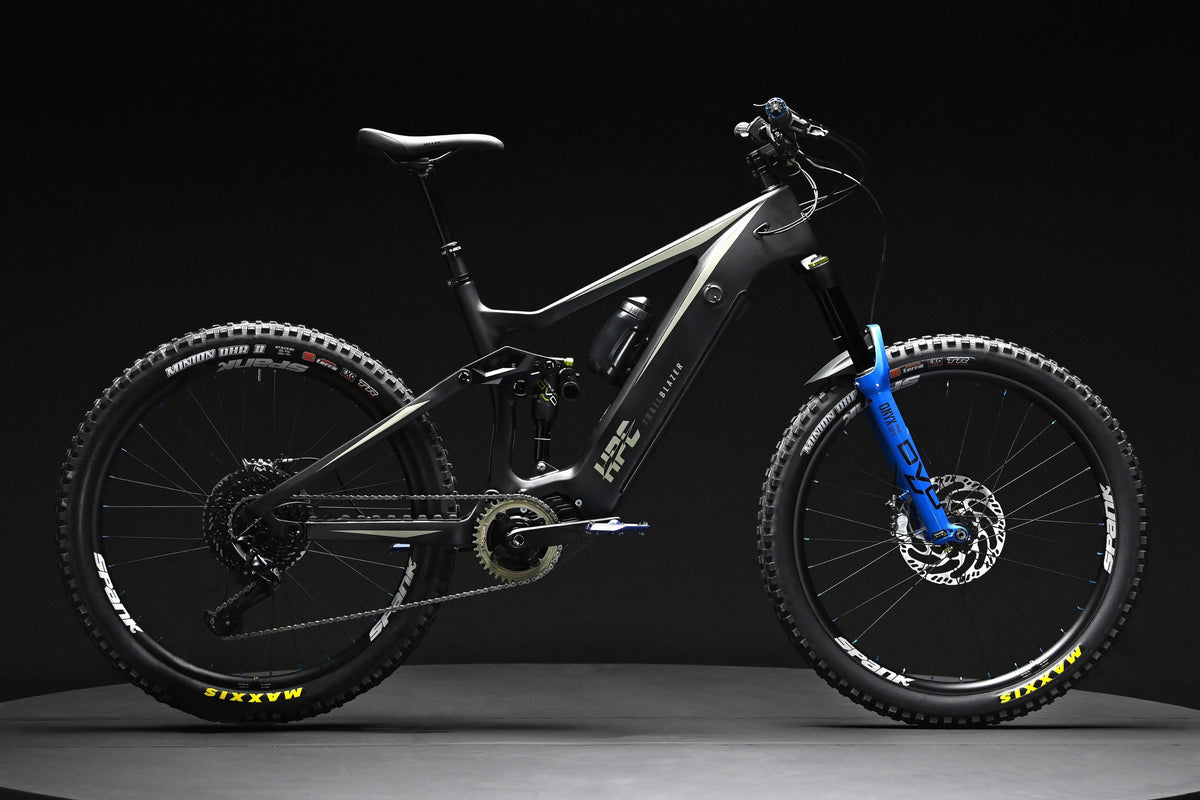

Comments