
E-Bikes With Pedals: Do High-Power E-Bikes Still Pedal?
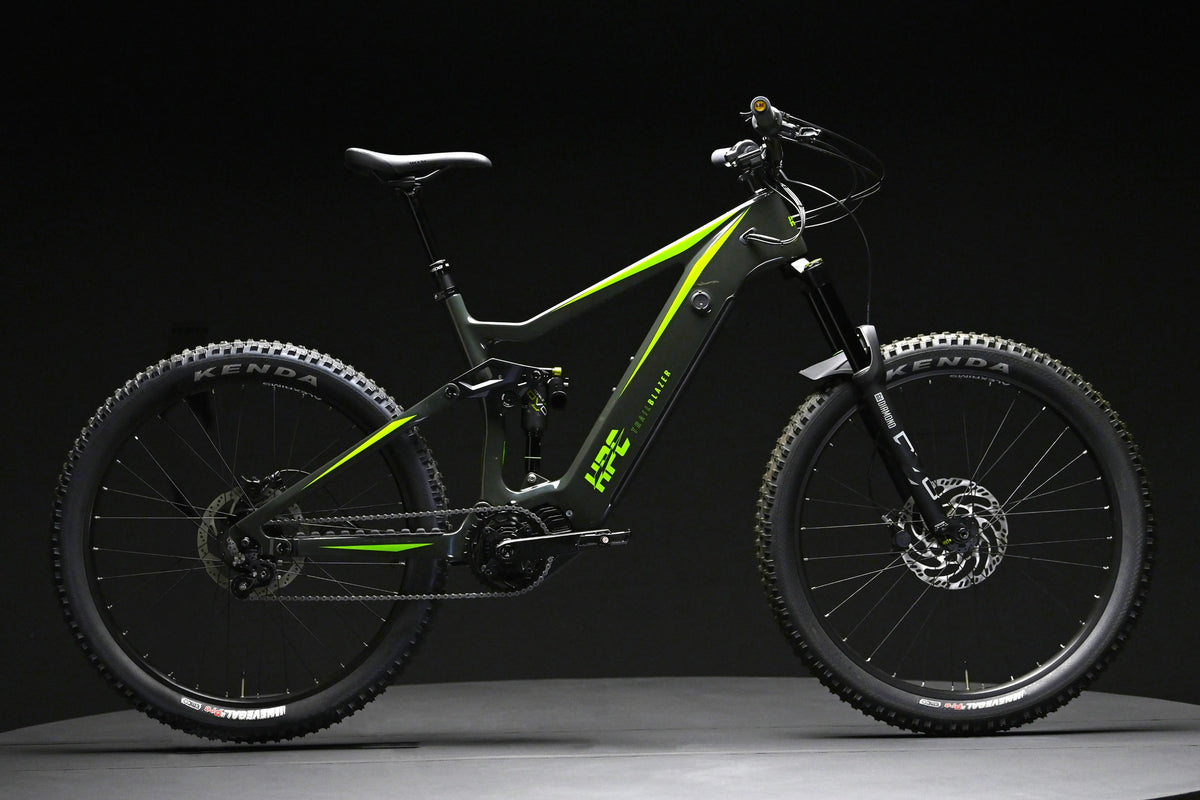
Search for an e bike with pedals and you will find a wide spread of machines: commuter bikes with a small hub motor, full-suspension trail bikes, and throttle-only electric motorbikes that have pedals bolted on for looks or no pedals at all. The question we hear most from riders shopping for something powerful is simple: once an e-bike makes real power, can you still pedal it in any meaningful way? For HPC's lineup, the answer is yes, and this guide explains how.
Why pedals still matter on an e-bike
A working pedal drivetrain gives you options that a throttle-only vehicle does not. You can add your own effort to stretch range, keep moving if you manage battery on a long ride, and get the natural feel of riding a bicycle. It also keeps the machine a bicycle in design: real cranks, a real chainring and cassette, and bike-style geometry. If you are comparing e-bikes with pedals to electric motorbikes, the pedal drivetrain is the clearest dividing line. For a broader look at that split, see our post on the fastest electric bikes with pedals you can actually ride.
Pedal assist vs. throttle
These are the two ways a rider can tell the motor what to do, and many bikes offer both.
- Pedal assist: The motor adds power while you pedal. Torque-sensing systems measure how hard you are pedaling and scale the motor's help to match, so the bike feels like your legs are stronger rather than like a switch has been flipped.
- Throttle: A thumb or twist control that sends power on demand, whether or not you are pedaling. It is useful for getting started on a steep grade, for resting your legs, or for a burst of power at the right moment.
Neither is better in every situation. Pedal assist rewards effort and tends to feel more natural. A throttle gives you control over exactly how much power you get and when. The most flexible bikes combine both.
Bafang mid-drive bikes: torque-sensing pedal assist plus a thumb throttle
Several HPC models use a Bafang mid-drive motor that mounts at the cranks and drives the chain, so it works through the bike's gears in the same way your legs do. Shift down for a steep climb and the motor gets the same mechanical advantage you do. HPC pairs that motor with torque-sensing pedal assist and a thumb throttle, which is uncommon at these power levels. Our explainer on how e-bike motors work covers mid-drives, hubs and direct-drive in more detail.
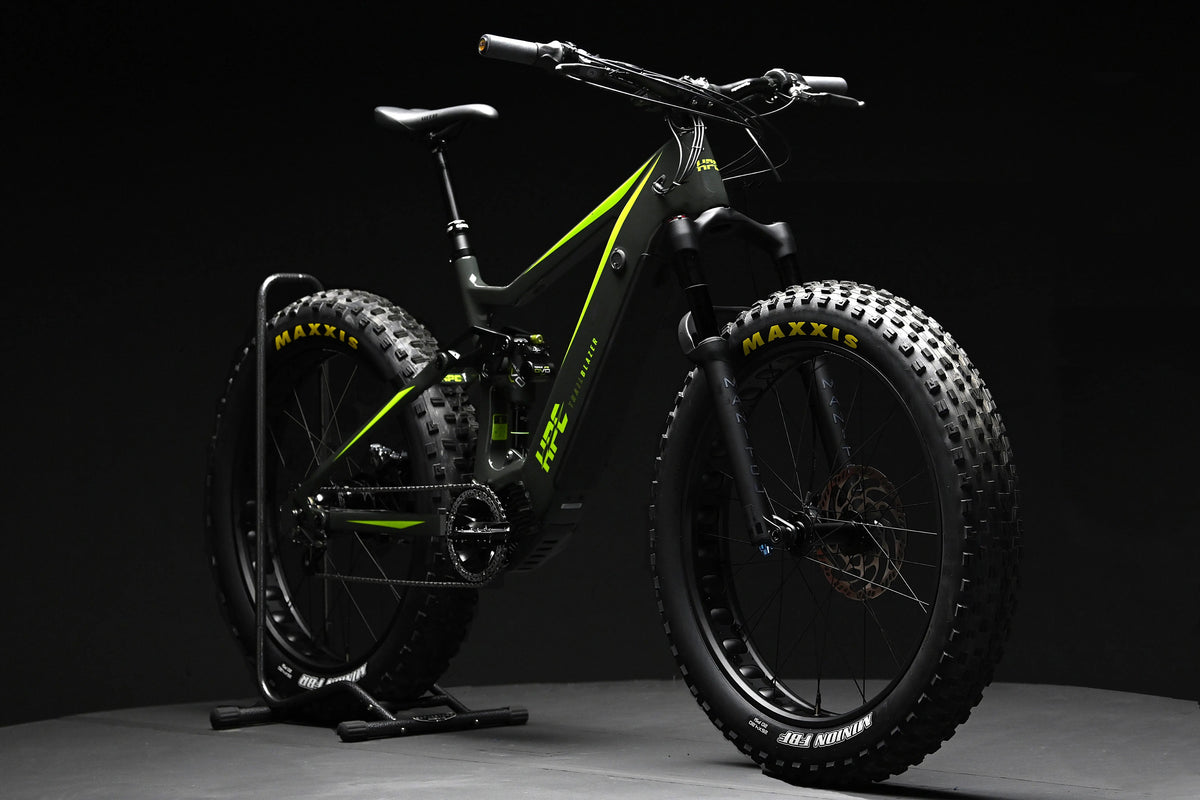
- Trailblazer (from $6,800): a full-carbon, full-suspension trail bike with torque-sensing pedal assist and an on-demand thumb throttle. Builds come in 750W, 1200W and 1600W, and the base 750W version weighs 51 lbs with the battery. The 11-50T gearing is low enough to climb almost anything, even with throttle only.
- Trailblazer Pro (from $13,000): the top of the Trailblazer line, with a 750W Class 1 build (20 mph), a 1200W build (30+ mph) and a 2000W build (38-40 mph), all with torque-sensing pedal assist and a thumb throttle.
- Scout (from $5,000): a USA-built hardtail with a torque-sensing mid-drive and an optional throttle, offered as a 750W Class 1, 1500W or 2000W build. HPC lists top speeds from 11 mph on technical climbs to up to 40 mph on the 2000W model.
- Titan (from $5,500): a USA-built fat-tire hardtail with a mid-drive of up to 2000W, five pedal-assist modes and a throttle-only option. The throttle is programmed for full power regardless of pedal assist mode.
If you want to compare the family side by side, the Trailblazer AT (from $7,000) and Trailblazer AT Pro (from $12,000) bring the Trailblazer platform to fat tires, and the Scout Pro (from $8,000) and Titan Pro (from $5,999) step up the hardtail range.
The Revolution and the Schlumpf drive: pedaling past 50 mph
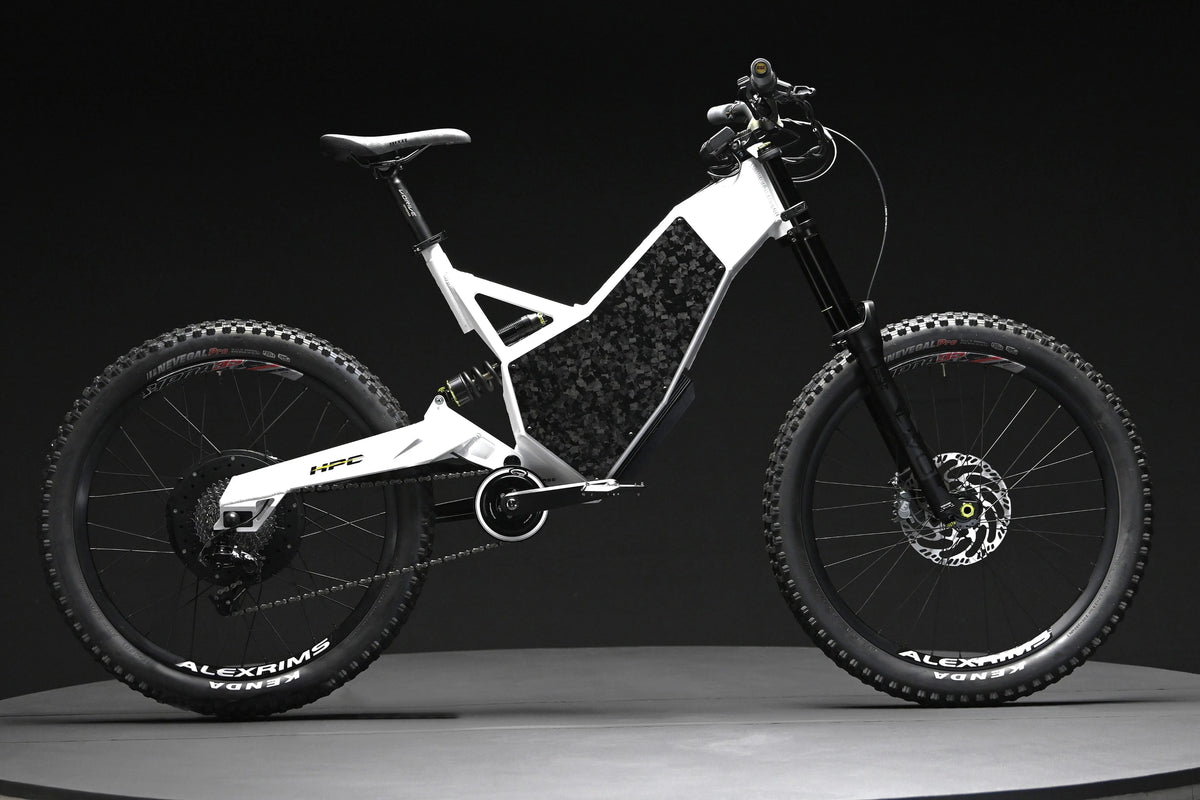
The Revolution is a different kind of bike. It uses a hub motor rather than a mid-drive, with power systems of 5,000W, 6,000W or 10,000W on the Revolution (from $11,000, up to 50-55 mph with the Thunderbolt motor). The Revolution X (from $15,000) goes up to 10,000W and 65+ mph.
What makes these bikes stand out for pedaling is the Schlumpf High Speed Drive. It is a two-speed gearbox built into the bottom bracket, shifted with a click of your heel. HPC describes it as giving an 85T-equivalent front chainring, which lets you keep pedaling beyond 50 mph. That is the reason HPC says the Revolution is the only high-performance e-bike we know of that lets you pedal at 50+ mph. It is HPC's claim about its own lineup rather than a survey of every bike on the market, but it captures the point: at these speeds most bikes have a drivetrain that spins out long before the motor does.
For the mechanics of how the gearbox works, read our post on the Schlumpf High Speed Drive. The Revolution W, HPC's 27-unit limited edition with 10,500W and an 80 mph top speed, also carries a Schlumpf High Speed Drive. Other Revolution models in the range include the Revolution MX ($10,500) and Revolution MX Pro ($12,500), both downhill-focused e-MTBs with up to 6,000W and a 50 mph top speed.
Which setup fits how you ride?
- You want to pedal often, climb, and keep the bike light: a mid-drive Trailblazer or Scout with torque-sensing pedal assist.
- You want big-tire float on sand, snow or loose ground: a Titan or Trailblazer AT.
- You want extreme speed and still want to pedal: a Revolution with the Schlumpf drive.
- You want to haul gear: the MPUV (from $4,499), HPC's utility e-bike.
A note on where you can ride
Bikes at these power levels are meant for private land and off-road use. Public road and path rules vary by state and city, and the standard e-bike classes have their own limits on power and assisted speed. Our post on street-legal fast e-bikes and classes 1-3 explains how the classes work. Always check your local regulations before you ride.
Ready to pick one?
If you want an e-bike with pedals that also has the torque to climb and the range for a full day, the Trailblazer is where most riders start. Explore the Trailblazer.
Comments