
Cycle Satiator Smart Charger: Programmable Charging for High-Voltage E-Bike Batteries
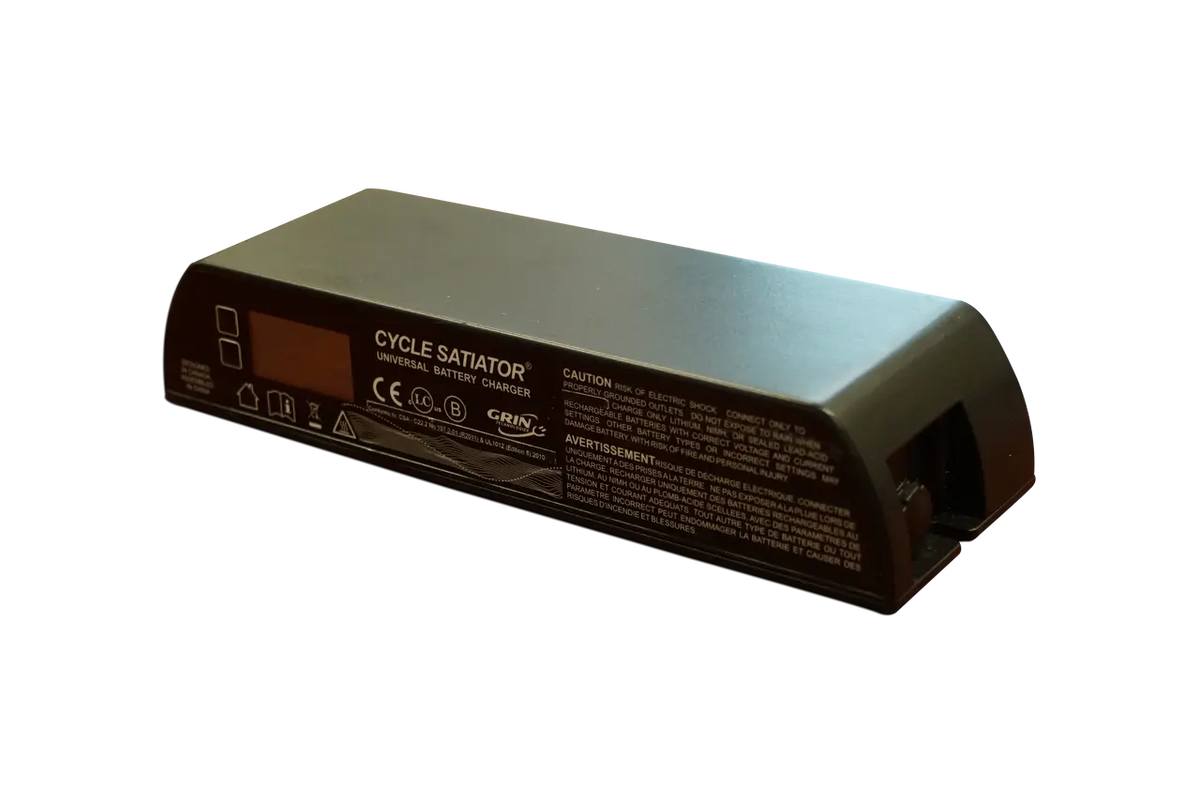
The charger is a battery-management decision
Most e-bike chargers do exactly one thing: push a fixed voltage until the pack is full, then stop. That works. It is also the arrangement most likely to shorten the life of an expensive battery, because "full" is the state lithium cells least enjoy sitting in.
The Cycle Satiator ($500) takes a different approach: a programmable, variable-voltage charger covering 36V to 90V with profiles you define.
What variable voltage actually gives you
A fixed 52V charger charges 52V packs. That is its entire repertoire. If you own a 52V trail bike and a 74V high-power build, you own two chargers — and if you add an 86V pack later, three.
The Satiator's 36V–90V range covers essentially every pack we build: 37V, 48V, 52V, 63V, 74V and 86V. One charger, one set of profiles, every bike in the garage.
For anyone running more than one voltage, the economics work out quickly. It also removes a genuine risk — grabbing the wrong fixed charger for the wrong pack is an expensive mistake, and with one programmable unit that mistake is much harder to make.
The part that actually matters: partial charging
This is the feature worth the money, and it is widely misunderstood.
Lithium cells age fastest at high states of charge. A pack held at 100% ages considerably faster than the same pack held at 80%, and the effect compounds over years. Heat makes it worse.
The Satiator lets you set a charge profile that stops at 80%, or 90%, or wherever you choose. For daily riding where you do not need full range, charging to 80% and only going to 100% before a long ride can meaningfully extend the usable life of the pack.
On a battery that costs $1,000 to $2,400, extending its service life by a year or two is not a marginal benefit. It is most of the charger's purchase price back.
The other controls
Charge current. You set the rate. Slower charging generates less heat and is gentler on cells. Charge overnight at a low rate for longevity; turn it up when you need a fast turnaround between rides. A fixed charger gives you one speed and no say.
Storage mode. If a bike is going away for the winter, the correct state is roughly 50–60% charge — not full, not empty. The Satiator will take a pack to a storage level and stop. Doing that properly is the difference between a pack that survives a winter well and one that comes out of the garage noticeably diminished.
Multiple stored profiles. Set up each bike once and select it at charge time.
Which HPC batteries it suits
The Satiator is designed for exactly the range we build across:
- 48V and 52V Trailblazer packs
- 52V, 63V and 74V hardcase systems
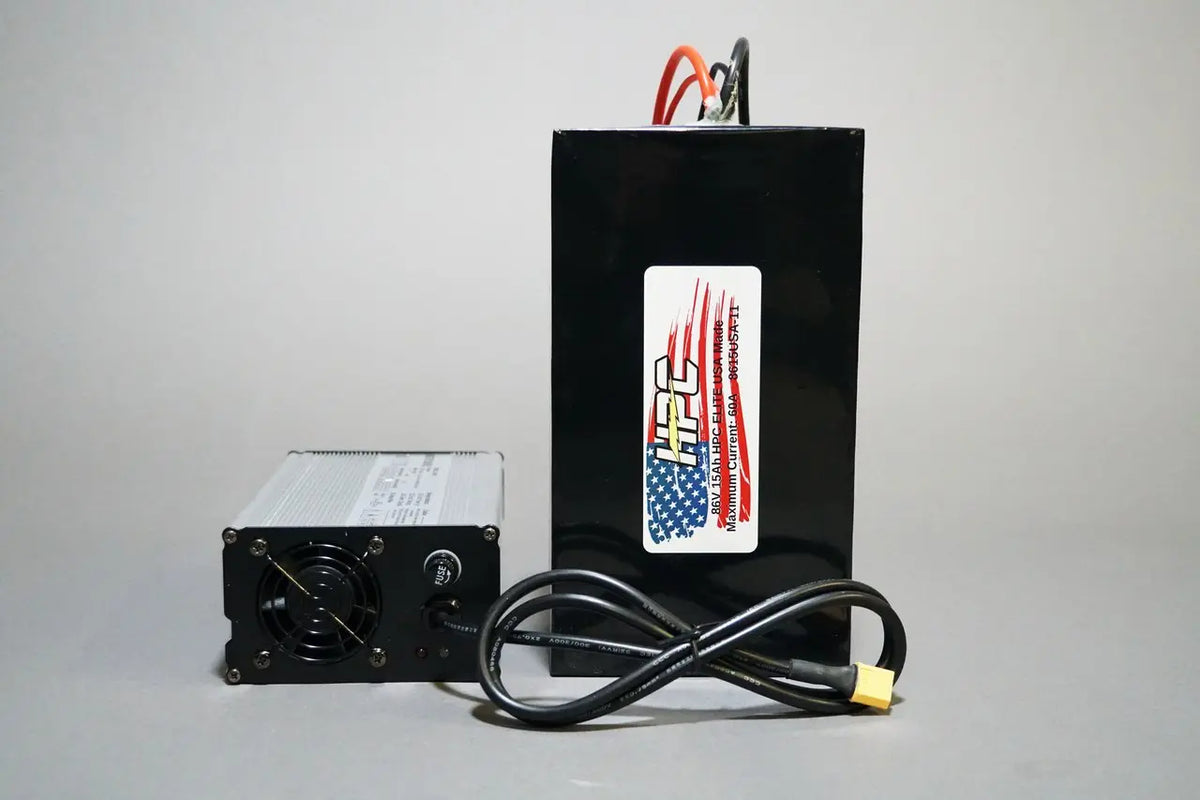
- 86V high-performance packs
You will notice it appears as an upgrade option on many of our battery listings — that is the same unit, bundled at the point where it makes most sense to buy it.
If you are choosing a pack, our high-voltage battery systems guide covers what each voltage is for.
Is it worth it for you?
Straight answer: it depends on what you are protecting.
Worth it if you own multiple bikes at different voltages, your pack cost four figures, you store bikes seasonally, or you want the longest possible service life from an expensive battery.
Probably not worth it if you own one bike with one modest pack, ride it daily, and replace it when it wears out. A good fixed charger is fine, and $500 buys a lot of riding.
We would rather you spent the money on the right thing. If you are unsure, tell us what you own and we will give you a straight view.
Connectors
Worth checking before you order: our packs use several connector standards across the range, and you may need an adapter to match the Satiator's output to your battery. XT60, Anderson and XLR are all in use. Send us your pack details and we will confirm what you need so you are not waiting on a part after delivery.
Comments