
E-Bike Charging Connectors Explained: XT60, XT90 & Anderson Adapters
Why there are so many
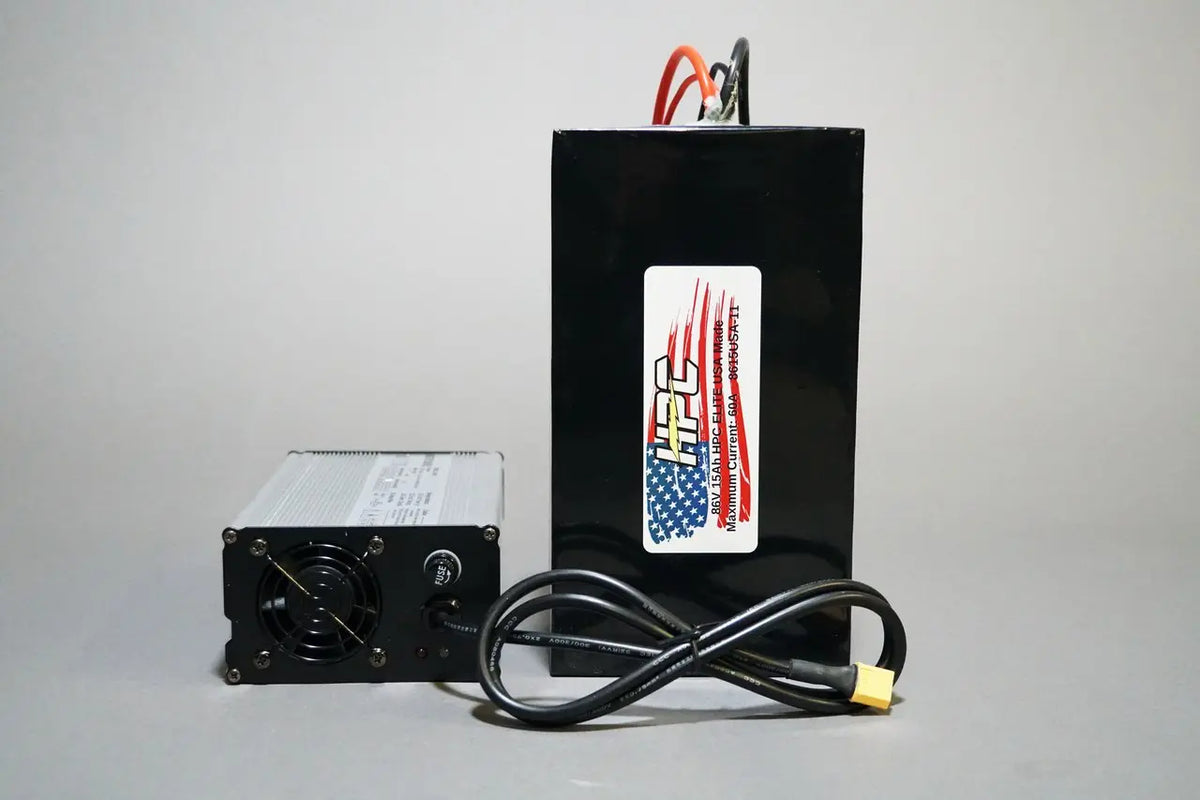
Nobody designed the e-bike industry's connector situation. It accumulated. Different manufacturers picked different standards at different times, current requirements rose, and now a garage with three bikes can easily contain three incompatible charging connectors.
This guide covers the three you will actually encounter and how to bridge between them.
The three connectors
XT60
Yellow, flat, with two bevelled blades. It came from the RC hobby world and has become the de facto standard across much of the e-bike industry.
It handles roughly 60A continuous, which is comfortably more than any charger needs. It is polarised — the shape prevents backwards connection — and it is compact. You will see XT90 occasionally, which is the same design scaled up for higher current, typically on discharge rather than charge circuits.
Anderson Powerpole
Modular plastic housings, usually red and black, that slide together. Common in higher-current applications and favoured by builders.
Two things distinguish it. It is genderless — every connector mates with every identical connector, so there is no male and female to keep track of. And the contacts are rated for many more mating cycles than an XT60, which matters if you plug and unplug constantly.
The catch: because the housings are modular, they can be assembled in either polarity orientation. Two Anderson connectors that look identical can be wired opposite. This is the one genuine hazard in this article, and we come back to it below.
XLR
The round three-pin connector borrowed from audio. Common on consumer and commuter e-bikes, usually for charging only.
It is fine at charging currents but not suited to high current, and pin assignment varies between manufacturers. It is more of a legacy standard than a choice anyone makes today.
The adapters
Two cover most situations:
- XT60 Female to Anderson Adapter — for an XT60 male source such as a charger output feeding an Anderson-equipped pack.
- XT60 Male to Anderson Adapter — for an XT60 female source.
The naming trips people up constantly, so here is the rule: the adapter is named for its own XT60 end, not for what it plugs into. An XT60 female adapter has a female XT60 socket, which means it mates with a male XT60 plug.
The practical method: look at your charger's XT60 end. If it is male, you need the female adapter. If female, the male adapter. If you are unsure, photograph both ends and send it to us — we would rather answer an email than have you order twice.
The polarity warning, which matters
Because Anderson housings can be assembled in either orientation, two Anderson connectors that appear identical may be wired in opposite polarity. Connecting a charger to a pack with reversed polarity can destroy the charger, damage the battery management system, or in a bad case cause a thermal event.
So, every time you use a new adapter or a new combination:
- Check polarity with a multimeter before connecting. Not once — every time the combination is new to you.
- Confirm the charger's positive reaches the pack's positive.
- Once verified, label the adapter with tape and a marker. Do it immediately; you will not remember in three months.
A multimeter costs less than a charger, and far less than a battery. If you do not own one and you are mixing connectors, buy one first.
A few practical points
Voltage still has to match. An adapter solves a physical connection problem. It does not make a 52V charger safe on a 74V pack. Confirm voltage compatibility first; the connector is the last question, not the first.
Adapters add resistance. Every junction is a small loss and a small amount of heat. One adapter is fine. Stacking three is asking for a warm connector and an unreliable connection. If you find yourself chaining adapters, fit the right connector instead.
Check them occasionally. Contacts wear and housings crack. An adapter that is getting noticeably warm in use should be replaced.
The simpler long-term answer
If you have several bikes, the cleanest solution is standardising rather than adapting. Fit the same connector across your packs and chargers and the whole problem disappears.
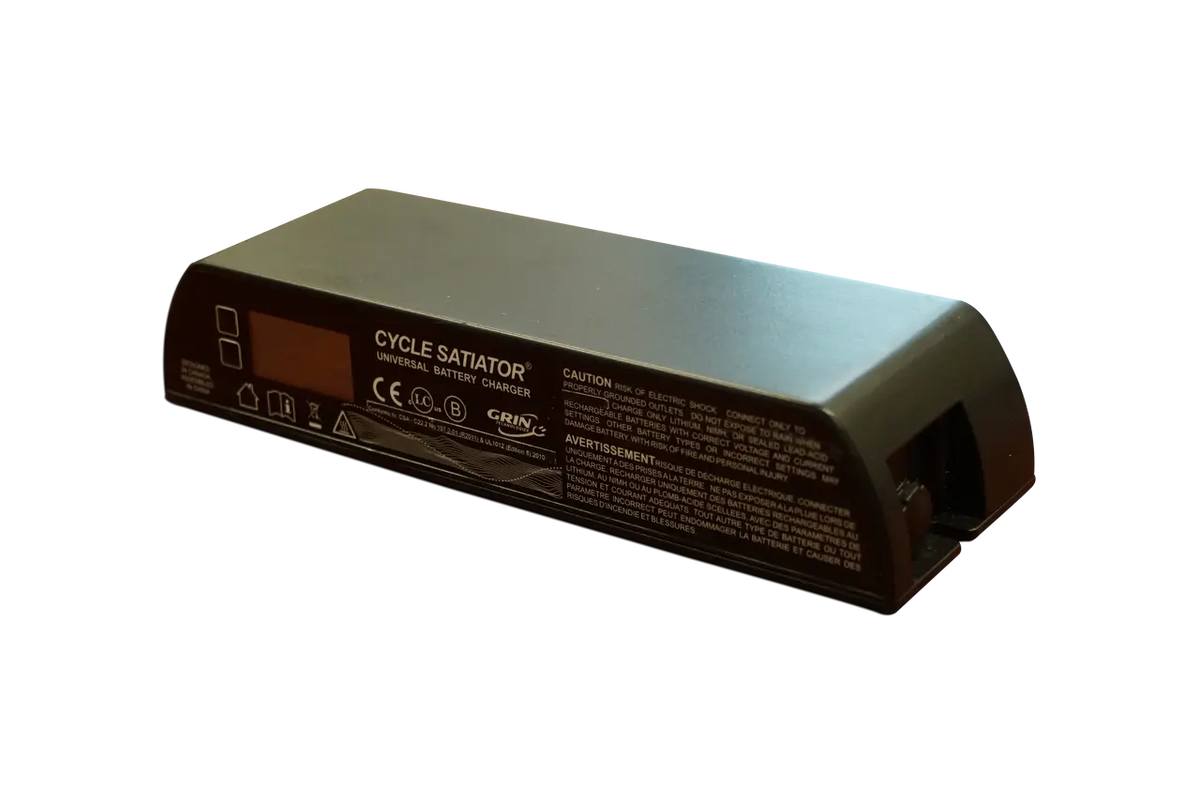
Pair that with a Cycle Satiator, which covers 36V to 90V with programmable profiles, and one charger with one connector handles the entire garage.
Tell us what you are running and we will confirm exactly which adapter or connector you need.

Comments