
What Makes an E-Bike High-Power? Watts, Volts and Real-World Capability
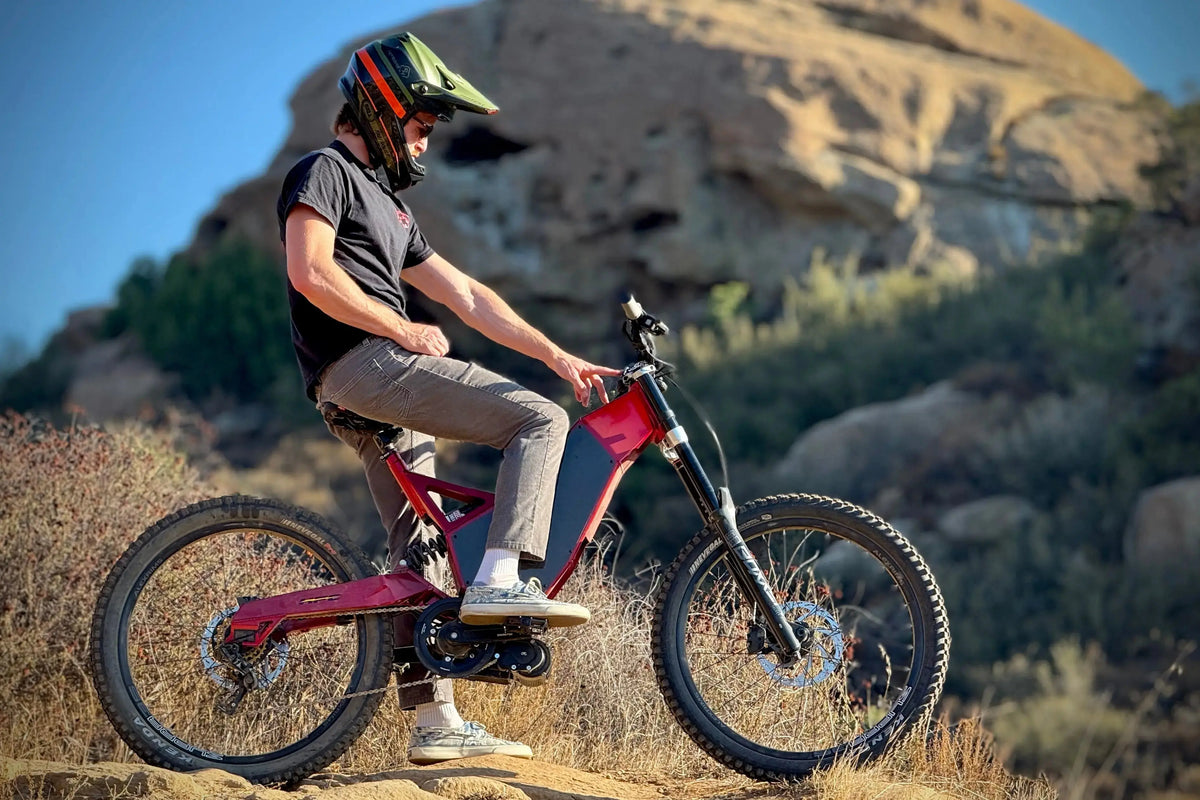
Fast and high-power are not the same thing
A bike can be fast in a straight line on fresh tarmac and still fall apart the moment the terrain asks something of it. High-power describes capability — the ability to deliver meaningful output repeatedly, under load, without fading. That is a different property from top speed, and it is the one that changes how a bike feels to ride.
Here is what actually produces it.
Watts: the number everyone quotes and half understands
Power in watts is voltage multiplied by current. A 72V system pulling 100A is producing 7,200W.
The problem with a headline wattage is that it is usually a peak figure — what the system can produce for a few seconds under ideal conditions with a full battery and cool components. Sustained output is a different and much lower number on most bikes, and it is the one that determines whether the bike is still delivering on the fourth climb of the day.
For context: a strong cyclist sustains roughly 250–300W. A 750W legal-class e-bike roughly triples a good rider. A 6,000W machine is in an entirely different category of vehicle.
Volts: the number that actually sets the ceiling
Motor speed scales with voltage. This is a hard ceiling — a 48V system has a maximum RPM that no amount of extra current will exceed.
Voltage also determines how efficiently power is delivered. Because resistive losses rise with the square of current, a higher-voltage system producing the same power runs cooler and sags less. That is why performance bikes move to 52V, 72V and beyond rather than simply drawing more amps.
Our packs run from 48V through 52V, 63V, 74V and up to 86V. The high-voltage battery systems guide covers what each is for.
Amps: where the real limit usually hides
Current is what the battery must actually deliver, and it is the constraint that catches people out. A pack rated for 50A continuous cannot feed a controller asking for 150A, no matter what either component claims on its own.
This is why upgrading one part rarely gives the gain people expect. A big controller on a modest pack is limited by the pack. A big pack behind a stock controller is limited by the controller. The system is only as capable as its tightest constraint.
Heat: the quiet arbiter of everything
Every inefficiency becomes heat. Heat raises resistance, which creates more heat. Motors demagnetise, controllers throttle back, cells age faster.
This is the real difference between a genuinely high-power bike and one with impressive numbers on paper. Thermal management — motor mass, controller design, cable gauge, airflow — is what lets a bike hold its output instead of promising it once and then retreating.
The whole bike has to keep up
Power without the chassis to use it is a liability. A high-power bike needs brakes sized for the weight and speed (four-piston hydraulics, large rotors), suspension that keeps wheels tracking under load, tyres rated for it, and a frame designed for forces a pedal bicycle never experiences.
Our Revolution frame is hand-welded 6061-T6 aluminium built one at a time in the USA, with every fitting — bottom bracket, headtube, swingarm, shock mounts — CNC-machined rather than sourced off the shelf. At 13 lbs it is the lightest frame of its type we know of. That is what a frame built for this kind of power looks like.
The HPC lineup, and where each bike sits
Revolution family — maximum capability
- Revolution — $11,000. The original platform. 5,000W / 6,000W / 10,000W options, 42–55 mph depending on motor choice, 55–100+ mile range.
- Revolution X — $15,000. The flagship. 6,000W standard with a 7,000W option capable of 60+ mph, RockShox BoXXer World Cup fork, Magura MT7 quad-piston brakes, Schlumpf High Speed Drive.
- Revolution MX — $10,500. 72V downhill e-MTB, up to 6,000W, 100-mile range, 50 mph.
- Revolution MX Pro — $12,500. The 78V version of the MX platform, with more electrical headroom for sustained hard use.
Trailblazer family — trail and enduro
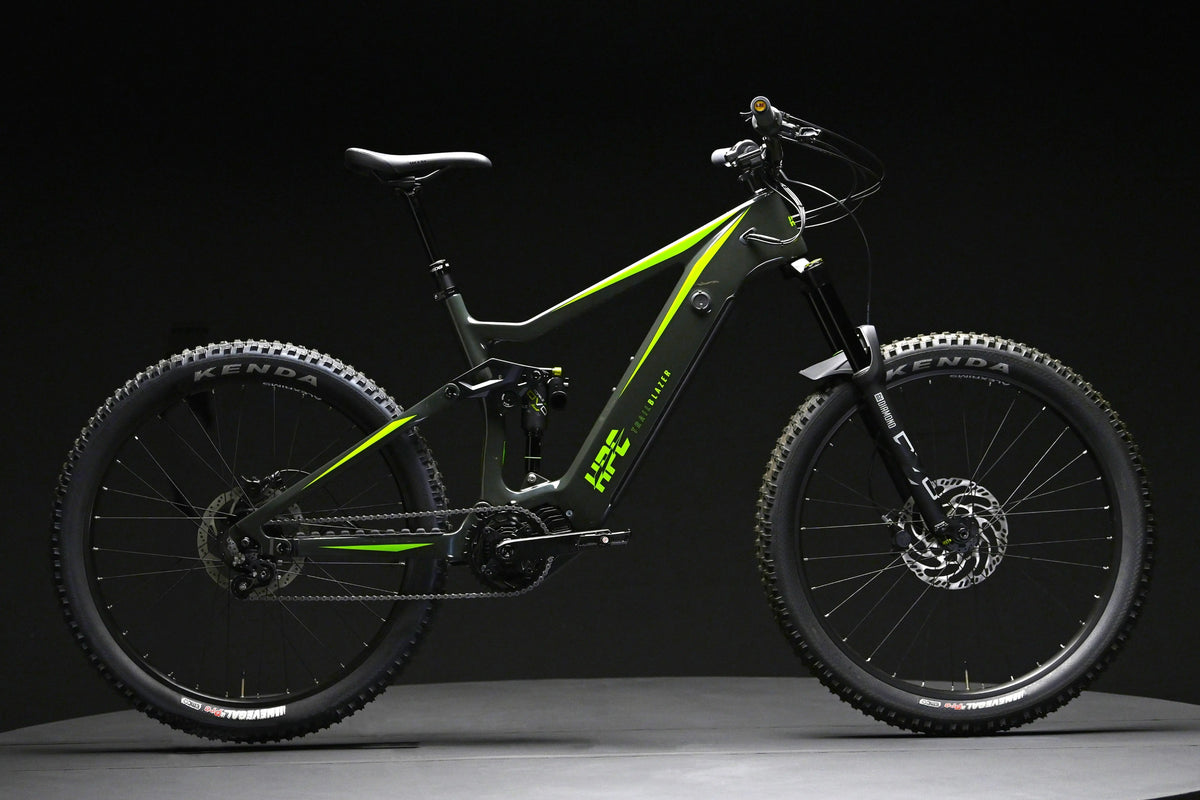
- Trailblazer — $6,800. Full-carbon full-suspension trail and enduro bike.
- Trailblazer Pro — $13,000. The pinnacle of the Trailblazer line, hand-built full carbon.
- Trailblazer AT — fat-tyre enduro for snow, sand and backcountry.
- Trailblazer AT Pro — the extreme-performance version of the AT platform.
Titan and Scout — hardtail and utility
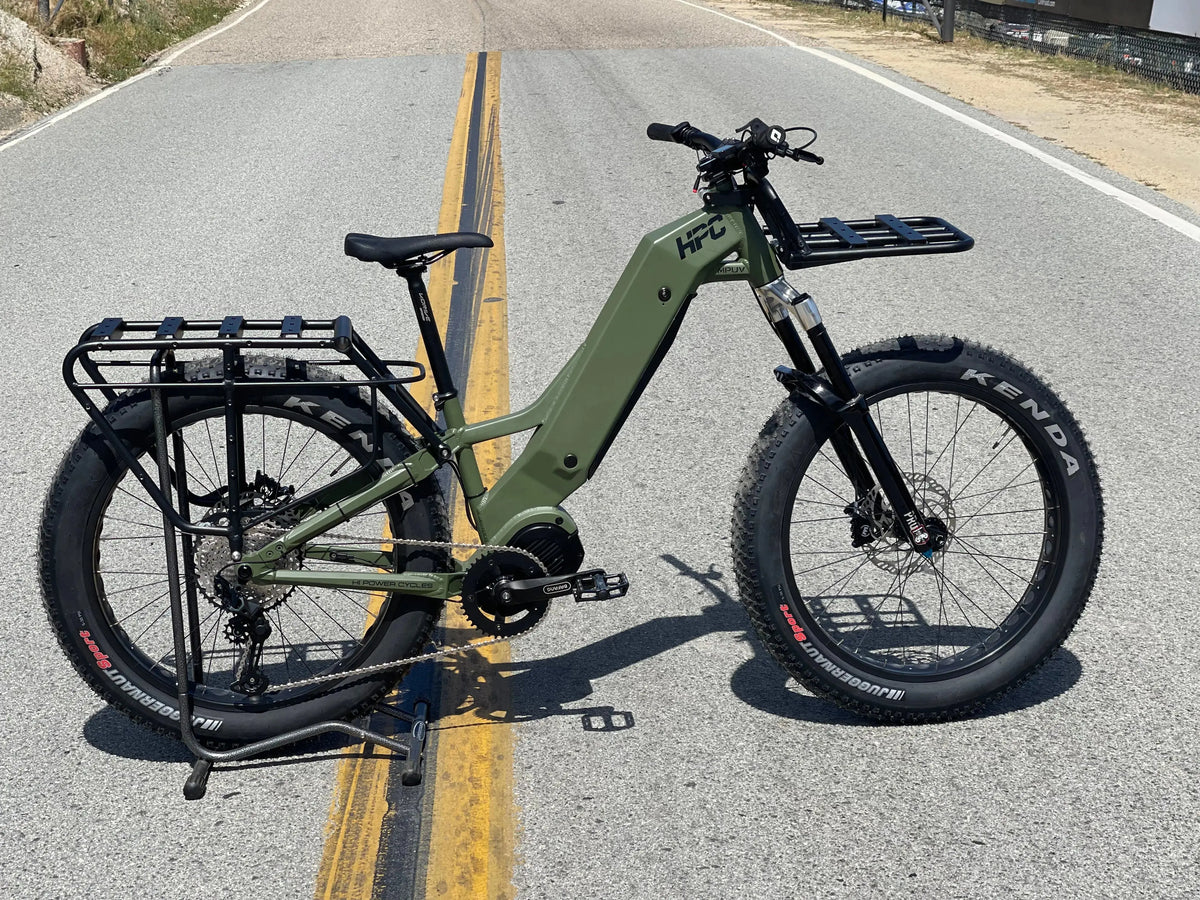
- Titan — $5,500. USA-designed, engineered and hand-welded fat bike.
- Titan Pro — $5,999. Bafang Ultra-equipped, built for hunting and hauling.
- Scout — $5,000. Rugged American-built hardtail.
- Scout Pro — $8,000. Our most advanced 27.5+ hardtail.
How much do you actually need?
More honestly than most of the industry will tell you: most riders need less than they think.
If you ride trails, a Trailblazer will out-perform a Revolution on the terrain you actually ride, because the thing limiting you is weight and handling, not watts. If you ride snow or haul gear, the AT or Titan platforms matter more than peak power. The Revolution family is the right answer when you genuinely need extreme capability and have somewhere legal to use it.
Note the legal position on the high-power machines: anything above 750W or assisting past 28 mph sits outside the US three-class e-bike system, which generally means off-road or private land. Worth settling before you buy, not after.
Tell us where and how you ride and we will give you a straight answer, including when the less expensive bike is the better one.

Comments