
74V 15Ah (20S) Lithium Battery System: Power, Range and Who It Is For
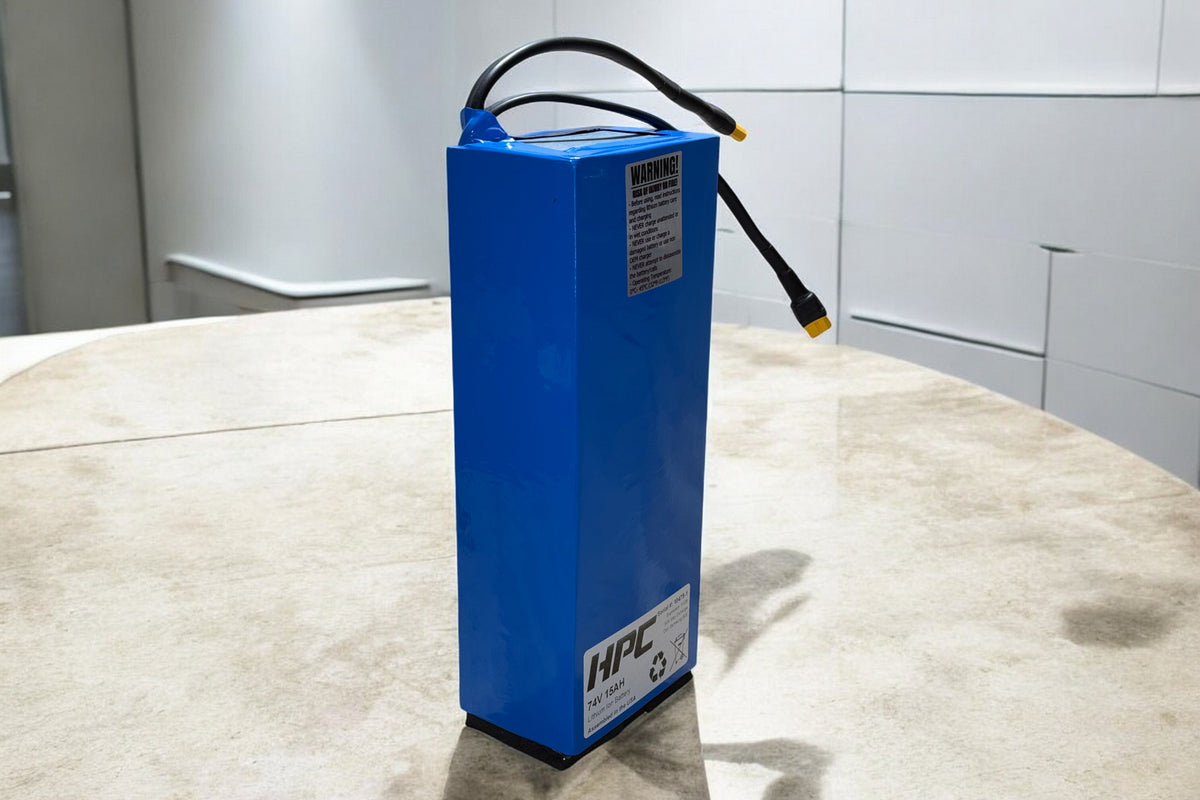
If you are planning a high-power build, the battery is the part that decides how hard and how far you can go. The 74V 15Ah (20S) Lithium Battery System is a USA-made hardcase pack built with Samsung 50S cells in a 20S3P configuration. This guide covers its specs, what 1,110Wh means for range, how to choose a charger, and which kind of build it suits.
74V 15Ah battery at a glance
| Spec | Detail |
|---|---|
| Nominal voltage | 74V (20S) |
| Capacity | 15Ah, 1,110Wh |
| Cells | Samsung 50S |
| Configuration | 20S 3P |
| BMS | 60A discharge, 10A charge, cell balancing, reverse polarity, overcharge and over-discharge protection |
| Max discharge | 60A (4,500W) |
| Max charge | 10A |
| Case | Reention DP2170-5C |
| Weight (no rack) | 10.2 lb |
| Charge cycles | 300 (Samsung 50S) |
| Warranty | 3 Year Limited Warranty |
| Starting price | $1,399 with the standard 2A charger |
What 20S 3P means
The configuration tells you how the cells are wired. "20S" is 20 cells in series, which sets the voltage: about 3.7V per cell gives the 74V nominal figure. "3P" is three of those strings in parallel, which sets the capacity: three parallel Samsung 50S cells give the 15Ah rating. Multiply 74V by 15Ah and you get the pack's 1,110Wh of stored energy, the real number to use when comparing batteries.
Why 74V
Power is volts times amps. A higher-voltage pack makes the same power with less current, which means less heat in the wiring and controller and less voltage sag under load. That is why high-power builds move up from 48V. Our guide to high-voltage e-bike battery systems from 48V to 86V explains the trade-offs, and notes 74V (20S) as the voltage where HPC's high-performance builds live.
Power: 60A and 4,500W
The BMS allows up to 60A of discharge, which the product page lists as 4,500W. That is the ceiling the pack can deliver, so match your controller and motor to it. If your build asks for more current than the pack's BMS allows, the BMS will protect the pack by cutting power, so it is worth checking the numbers before you order. The pack also uses a custom BMS with cell balancing and reverse polarity, overcharge and over-discharge protection.
Range: what 1,110Wh means
We do not give a single range number for this pack because it depends on the bike and how you ride. As a rule, range comes from capacity divided by how much energy you use per mile. Rider weight, terrain, speed, wind and how much you use the throttle versus pedaling all change that number, and riding fast uses far more energy per mile than riding gently. What 1,110Wh gives you is a solid amount of stored energy in a 10.2 lb pack (without a rack). If you need more range than one pack gives, ask us about larger or custom packs.
Charger options
A 84V 2A charger is included. The charge time for each option is listed on the product page:
- 2A (standard): 7.5 hour charge time, included in the base price.
- 4A: 4 hour charge time, +$100.
- 8A: 2 hour charge time, +$200.
- Digital charger: custom charge profiles and a 3 hour charge time, +$300.
Faster charging is convenient, but slower charging is gentler on cells. If you want to control the charge level, for example stopping at 80% for daily riding, read our guide to the Cycle Satiator programmable charger. If your charger and battery use different plugs, our guide to charging connectors explains XT60, Anderson and adapters.
Who the 74V 15Ah pack is for
- Builders planning a 74V (20S) system who want a USA-made pack with name-brand cells and a BMS rated for 60A.
- Riders who want less voltage sag than a lower-voltage pack gives at the same power.
- Anyone matching a battery to a controller and motor that is designed for around 74V.
Check the controller's voltage range and current limit, and your motor's needs, against the pack before you buy. Not sure? Tell us about your build and we will confirm the right pack and charger. You can also browse the full range in the 74V battery systems collection, or all USA-made battery systems.
Built to order
Each pack is built to order so you get a fresh battery. The product page notes a current battery lead time of 2-3 weeks for manufacturing. HPC's builders have over 12 years of experience building batteries, and the cells are matched, which means less resistance and less voltage sag. Check the product page for the latest lead time.
Using it safely
High-voltage lithium packs deserve care. Use the correct charger for the pack's voltage, charge on a non-flammable surface and never leave a charging battery unattended, and do not use a battery that is damaged. High-power builds are meant for private land and closed courses, so check your local rules before you ride.
Comments