
Electric Cycle vs E-Bike: What the Names Mean and How to Choose
Shoppers use a lot of names for the same kind of vehicle: electric cycle, electric bicycle, e-bike, ebike, pedelec. They are largely interchangeable, and which one you see depends mostly on where you are and who is writing. This guide explains what the terms mean, where the real differences are, and how to choose the right bike for how you ride.
Electric cycle, electric bicycle and e-bike: the same thing
Each name describes a bicycle with a battery, a motor and a controller. A rider can pedal, and the motor adds power. In some markets "electric cycle" is the common everyday phrase; in others "electric bicycle" is the formal or legal term, and "e-bike" is the shorthand used in shops, reviews and online. If you are searching for one, results for the others usually apply too.
What matters more than the label is what the bike can do: how much power it has, how it delivers that power and what it is built for. New to the basics? Our guide, What Is an E-Bike? How Electric Bikes Work, Classes and What to Look For, walks through motors, batteries and controllers.
Where the names can mean different things
Some places use the words as formal categories. A regulator may define an electric bicycle by its maximum motor power and assisted speed, while a vehicle above those limits is classed as something else, such as a moped or motorcycle. The exact definitions differ by country, state and even by trail or land manager, so check your local regulations before you buy or ride. Our post on e-bikes versus electric motorcycles explains where higher-power bikes sit between the two.
How to choose: start with where you ride
Work backward from the terrain and the job the bike has to do, not from the spec sheet.
- Trail and enduro riding: look for a mid-drive, full suspension and a frame built for the loads.
- Snow, sand and backcountry: look for fat tires and enough torque to climb on loose ground.
- Hauling gear: look for rack capacity, a strong motor and a large battery.
- Downhill and freeride on private land: look for long-travel suspension, strong brakes and high power.
Motor, battery and controller: what to compare
A mid-drive motor pulls through your gears, which helps on steep climbs. A hub motor is simpler and drives the wheel directly. Battery size is measured in watt-hours, and that number, not the voltage alone, tells you about range. The controller decides how smoothly power reaches the motor. More detail is in How E-Bike Motors Work.
HPC bikes by riding style
Trail and enduro
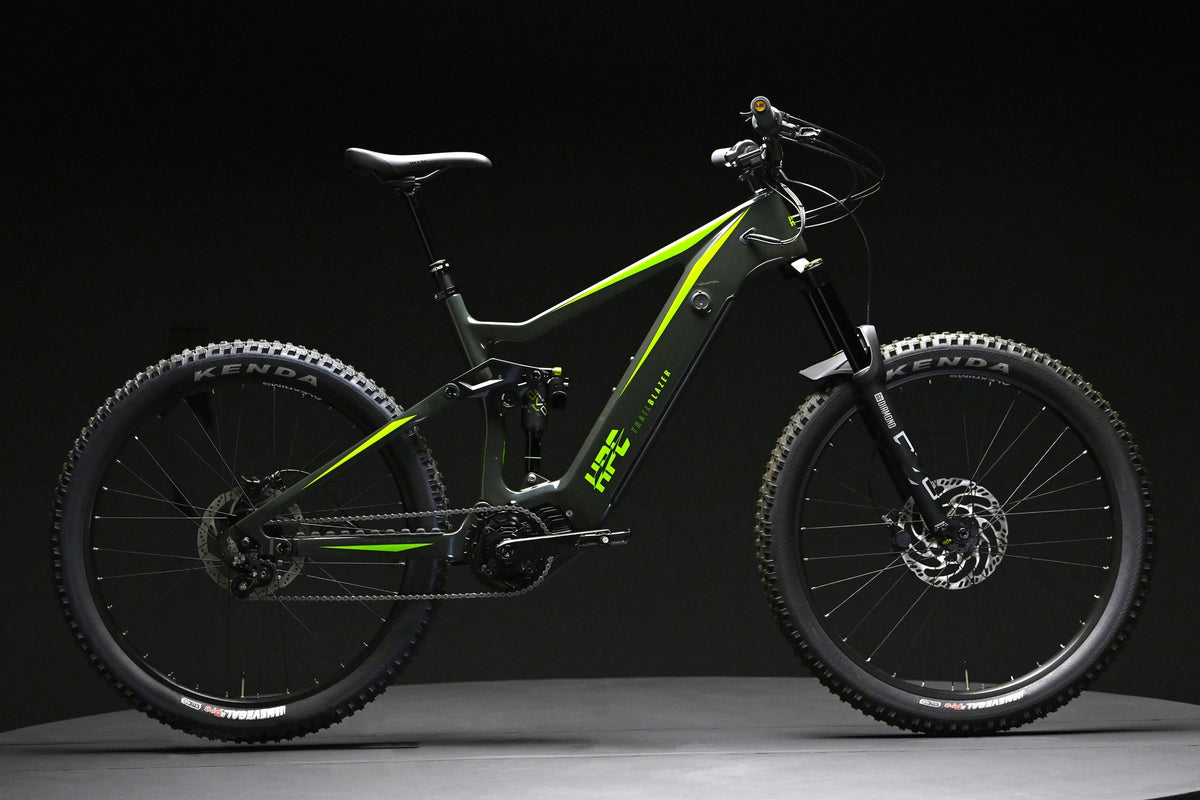
The 2026 Trailblazer (from $6,800) is a full-carbon, full-suspension trail bike with 160mm of front travel and 155mm at the rear, in 750W, 1200W and 1600W builds, at 51 lbs for the base version. The 2026 Trailblazer Pro (from $13,000) is the top build, with factory-tuned suspension and drivetrain options including SRAM Transmission XX, Rohloff hubs and a Gates Carbon belt drive.
Fat tires and backcountry
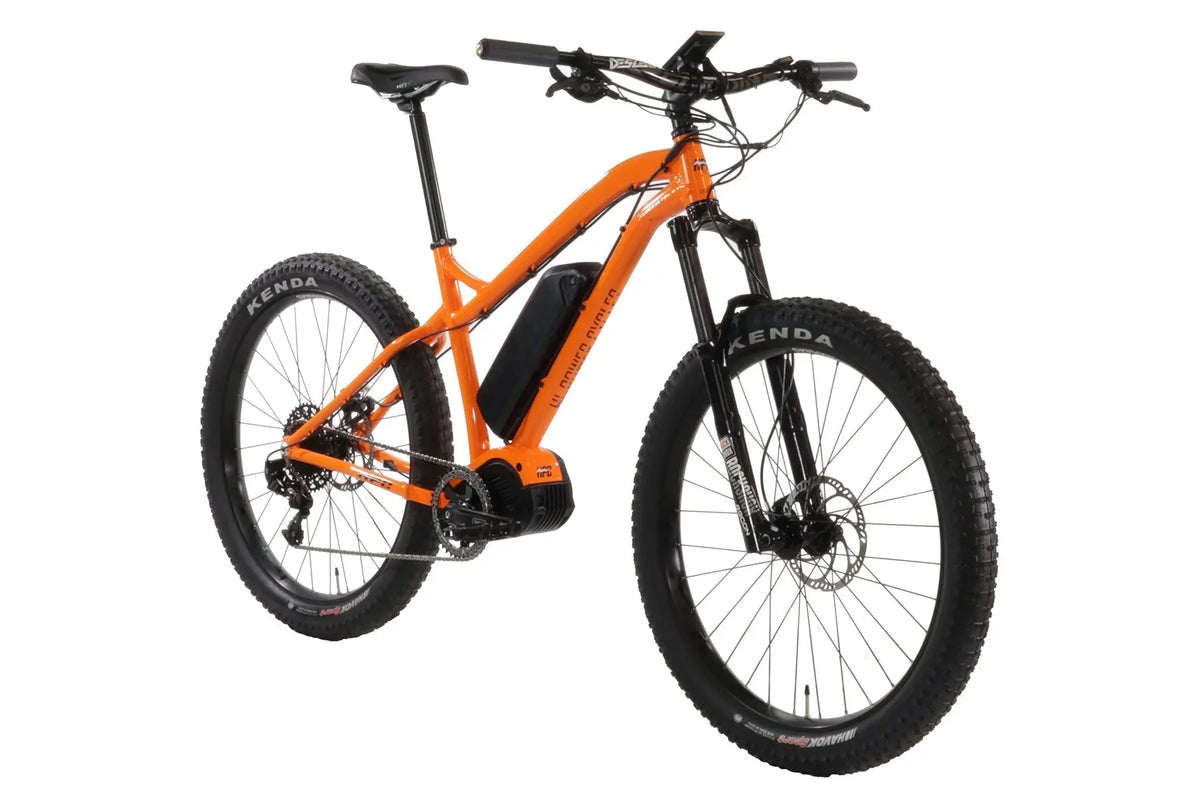
The Titan ($5,500) is a USA hand-welded hardtail with up to 2000W and 26x4.5 fat tires. The Titan Pro ($5,999) adds up to 3,000W and long-range batteries. For a fat-tire full-suspension bike, see the Trailblazer AT (from $7,000) and Trailblazer AT Pro (from $12,000). If you need to carry cargo, look at the MPUV, which HPC lists at up to 350 lb of total payload.
Hardtail all-rounder
The Scout (from $5,000) is a USA-built hardtail with a torque-sensing mid-drive and an optional throttle, offered in 750W, 1500W and 2000W configurations.
Downhill and freeride
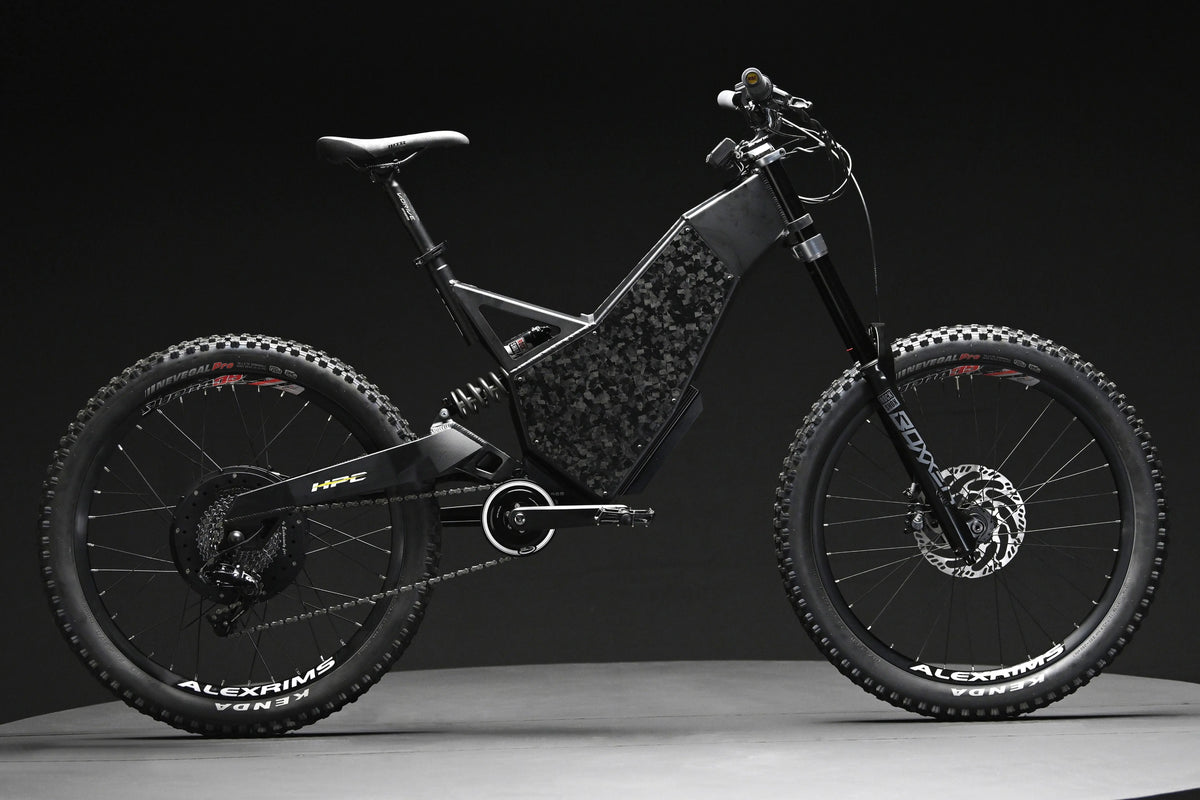
The Revolution (from $11,000) is a hand-welded downhill e-bike with 5,000W, 6,000W or 10,000W power systems. The Revolution X ($15,000) adds a World Cup fork and up to 10,000W with a 65+ MPH top speed. Bikes at these power levels are intended for private land and off-road use.
Questions to ask before you buy
- Where will I ride, and what do the local rules say about that bike?
- How many watt-hours is the battery, and can I get a replacement later?
- Are the brakes sized for the weight and speed of the bike?
- Who supports the bike if a part fails?
Still weighing options? Our 2026 high-performance buyer's guide compares the range in more depth.
Comments