
Fast E-Bikes Explained: What Counts as Fast and What Comes After
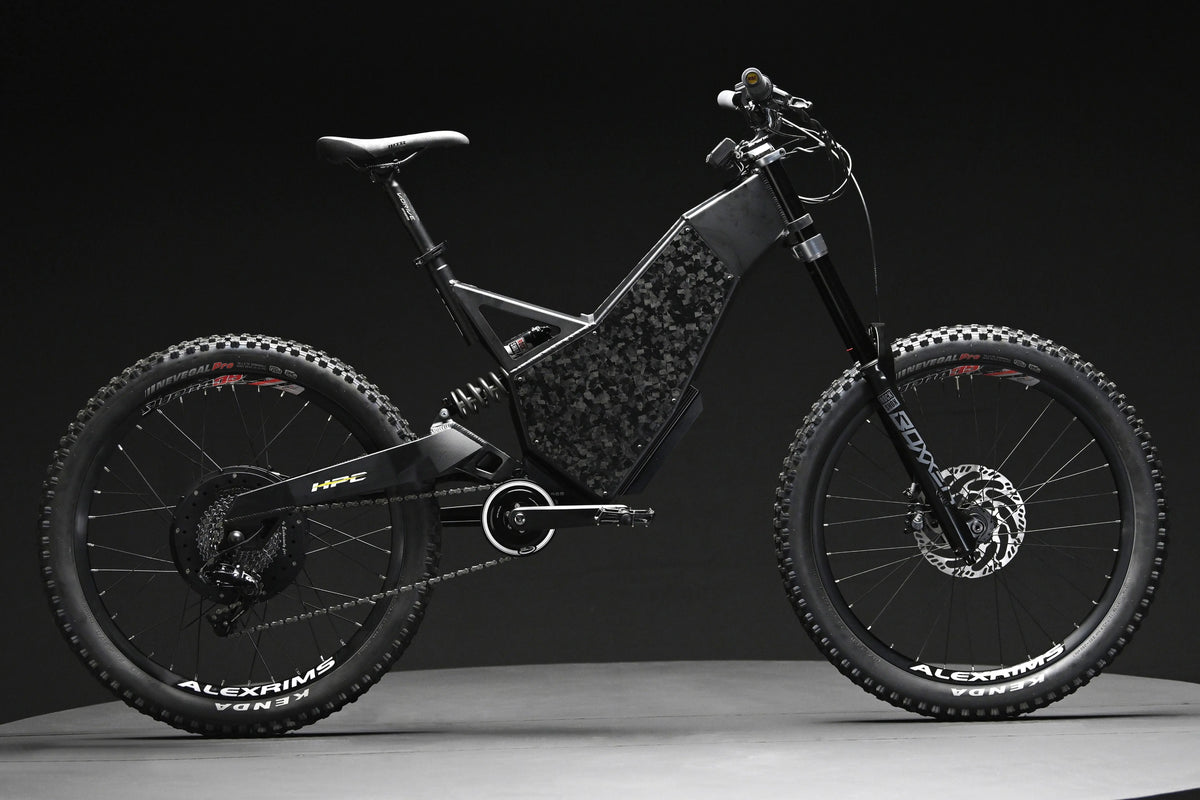
Ask five riders what a fast e bike is and you will get five answers. To a commuter, 28 mph is quick. To a downhill rider, 28 mph is a warm-up. This guide is the umbrella view: it defines the speed tiers, explains what changes as you move up them, and points you to the deeper posts and the HPC bikes at each level. It does not replace those posts, so follow the links when you want specifics.
Tier 1: The class-limited e-bike, 20 to 28 mph
Most fast electric bikes sold at mainstream retailers sit here. In the US, e-bikes are sorted into three classes: Class 1 (pedal assist, up to 20 mph), Class 2 (adds a throttle, up to 20 mph) and Class 3 (pedal assist, up to 28 mph). These classes exist to define what counts as a bicycle on roads and paths, and each is capped at 750W in most states. They are a legal framework, not a description of what a bike can physically do. See street-legal fast e-bikes and classes 1-3 for how that works, and how fast do electric bikes really go for the fundamentals.
Tier 2: 30 to 40 mph builds
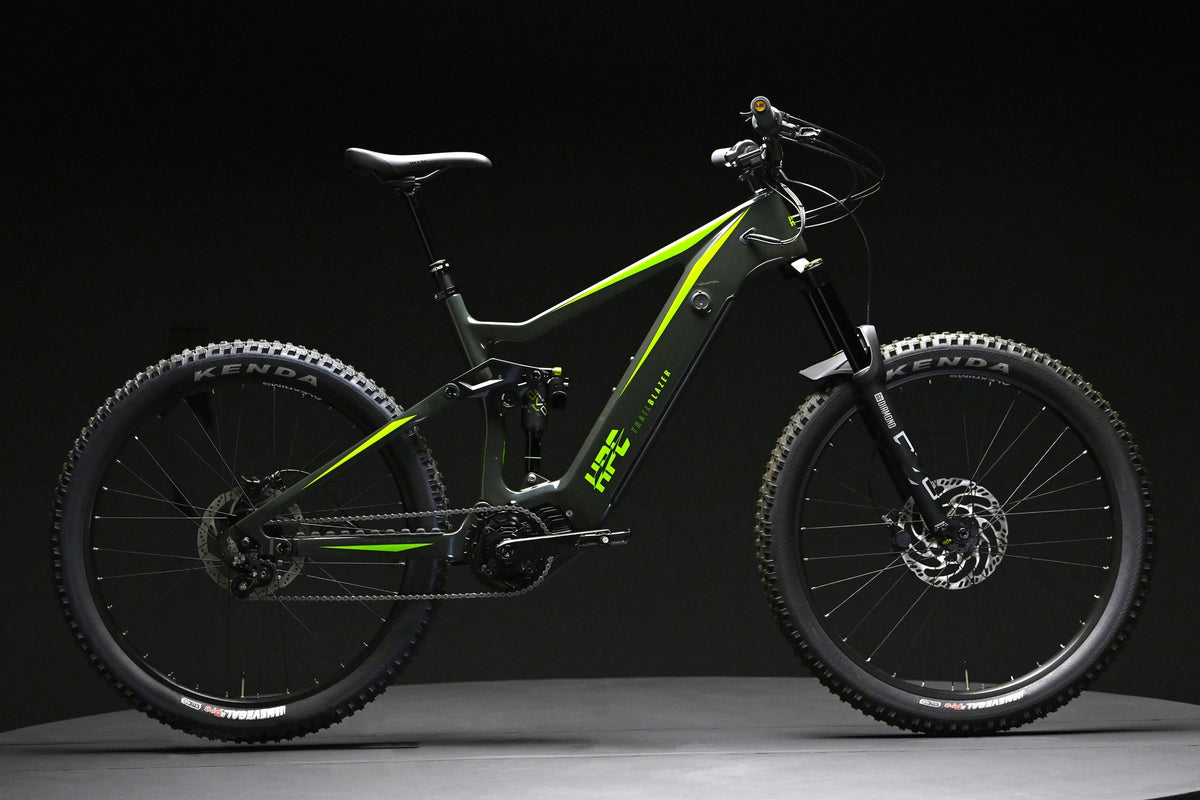
Above the classes, speed comes from power, voltage and a controller that can deliver current. HPC's Trailblazer Pro is offered as a 750W Class 1 build (20 mph), a 1200W build (30+ mph) and a 2000W build (38-40 mph). The Scout is offered in 750W Class 1, 1500W and 2000W versions, with HPC listing up to 40 mph on the 2000W model. For real-world context, read 40 mph electric bikes.
Tier 3: 50 to 60 mph and beyond
This is where the hardware changes: higher-voltage batteries, larger hub motors and controllers built for thousands of watts. The Revolution family lives here, with the Revolution and Revolution MX platforms at up to 50 mph or more, and the Revolution X at up to 10,000W and 65+ mph. Our posts on 50 mph and 60 mph e-bikes cover the details.
Tier 4: 70 to 80 mph
At the top sits the Revolution W, a limited run of 27 units with 10,500W and an 80 mph top speed. Getting there takes a system: a high-voltage pack, a motor that survives the heat, a high-current controller, and brakes and tires to match. See 70 mph electric bikes and 80 mph electric bikes.
What actually makes an e-bike fast
- Battery voltage: the biggest lever on top speed. Higher-voltage packs spin the motor faster and run with less current.
- Motor power: more watts means more headroom against wind and rolling resistance.
- Controller current: an undersized controller leaves speed and acceleration unused.
- Gearing, weight and terrain: these set the real-world number.
Claimed top speeds are best-case figures with a light rider, flat ground and a full battery. Judge a bike by its voltage, motor and controller specs, not the headline mph alone.
A note on where fast bikes can be ridden
A bike that goes beyond the class limits is generally intended for private land and off-road use. In California, for example, a bike capable of more than 28 mph under power is no longer classed as an electric bicycle under SB 1271, as covered in our earlier guides. Rules differ by state and locality, so check your local regulations before you ride.
Every current HPC bike, linked
Revolution family
- Revolution: from $11,000. 5,000W, 6,000W or 10,000W systems, up to 50-55 mph with the Thunderbolt motor.
- Revolution X: $15,000. Up to 10,000W and 65+ mph.
- Revolution MX: $10,500. A downhill e-MTB with up to 6,000W and a 50 mph top speed.
- Revolution MX Pro: $12,500. The 78V version of the MX.
- Revolution W: $29,995. 10,500W, 80 mph, limited to 27 units.
Trailblazer family
- Trailblazer: from $6,800. 750W, 1200W and 1600W builds.
- Trailblazer Pro: from $13,000. 750W Class 1, 1200W and 2000W builds.
- Trailblazer AT: from $7,000. The fat-tire enduro.
- Trailblazer AT Pro: from $12,000. The extreme-performance fat enduro.
Scout, Titan and utility
- Scout: from $5,000. Torque-sensing mid-drive with optional throttle.
- Scout Pro: from $8,000. A mid-drive of up to 3000W.
- Titan: from $5,500. Fat-tire hardtail with up to 2000W.
- Titan Pro: from $5,999.
- MPUV: from $4,499. HPC's utility e-bike.
Prices and specs can change, so confirm on each product page. For a side-by-side of the Revolution range, see our Revolution lineup explained.
Where to start
If you are chasing the top of the speed range, the Revolution is where HPC's fastest platform begins. Explore the Revolution.
Comments