
The Most Expensive E-Bikes and What the Money Actually Buys
The question behind the question
People searching for the most expensive e-bike are usually asking something more interesting than "what is the biggest number." They want to know whether the price is justified, or whether it is a badge.
Fair question. Here is an honest accounting of where the money goes at the top of this market.
The frame is the first big cost
A mass-produced e-bike frame is made in a mould, in volume, and costs very little per unit. That is an efficient way to build a bicycle.
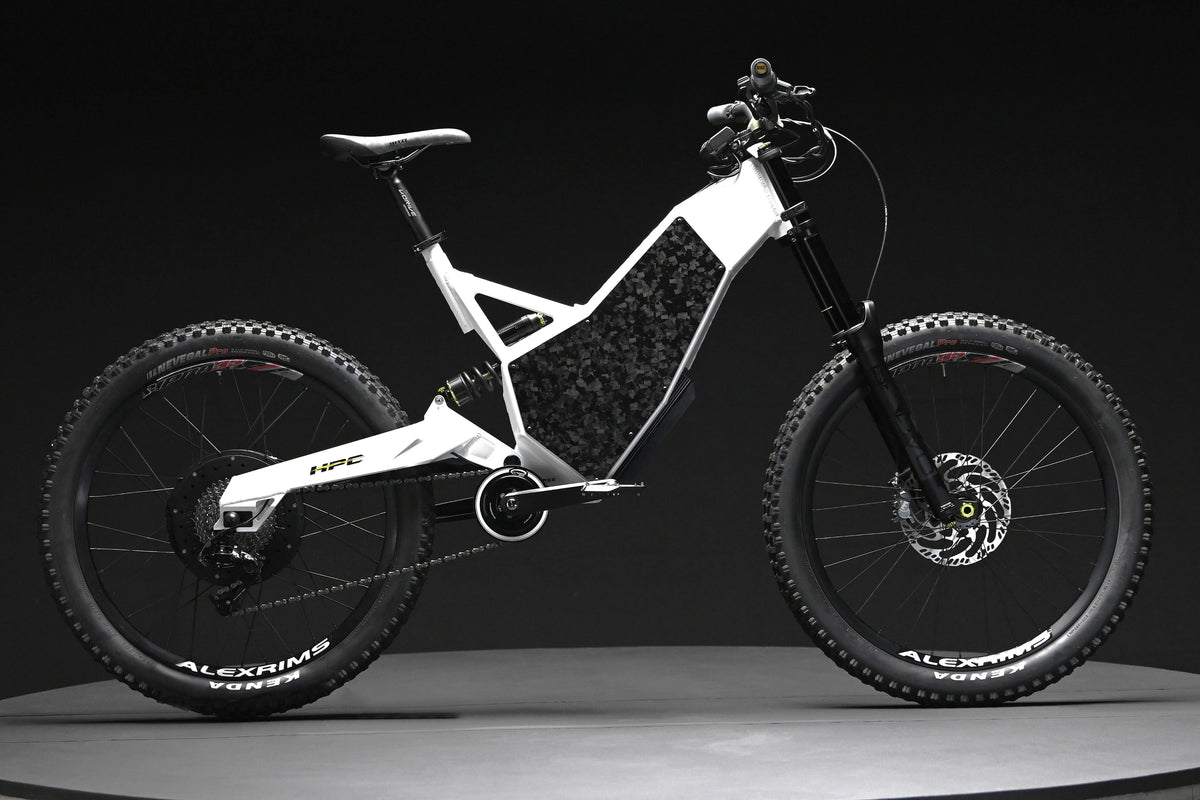
A hand-welded frame is a different proposition. Our Revolution frame is 6061-T6 aluminium, welded one at a time in the USA by a TIG welder with over thirty years of experience. There is no off-the-shelf part in it — bottom bracket, headtube, swingarm, shock mounts and seat tube are all CNC-machined from aluminium in small batches.
The result weighs 13 lbs, which is the lightest frame of its type we know of, and represents years of R&D across five prototypes. That engineering has to be paid for across a small production run rather than amortised over hundreds of thousands of units.
This is the fundamental reason hand-built costs more. It is not margin. It is volume.
Batteries are where the money quietly goes
Cells are not a commodity. High-drain cells from a top-tier manufacturer cost several times what generic cells do, and they differ in how much current they deliver, how they age, how they behave at temperature, and how they fail.
On a high-power bike this is not an area to economise. A pack that sags under load ruins the ride; a pack that fails badly is dangerous. Our 86V systems run Samsung 50S cells for higher energy density and less voltage sag, and a large high-voltage pack can run $2,400 on its own.
When you see a $1,500 e-bike and a $15,000 e-bike, a meaningful part of the gap is in cells you cannot see.
Components that are actually rated for the job
At the top of the market the parts list stops being a compromise:
- Brakes. The Revolution X runs Magura MT7 quad-piston brakes. On a heavy bike capable of 60+ mph, braking performance is not a specification line — it is the safety margin.
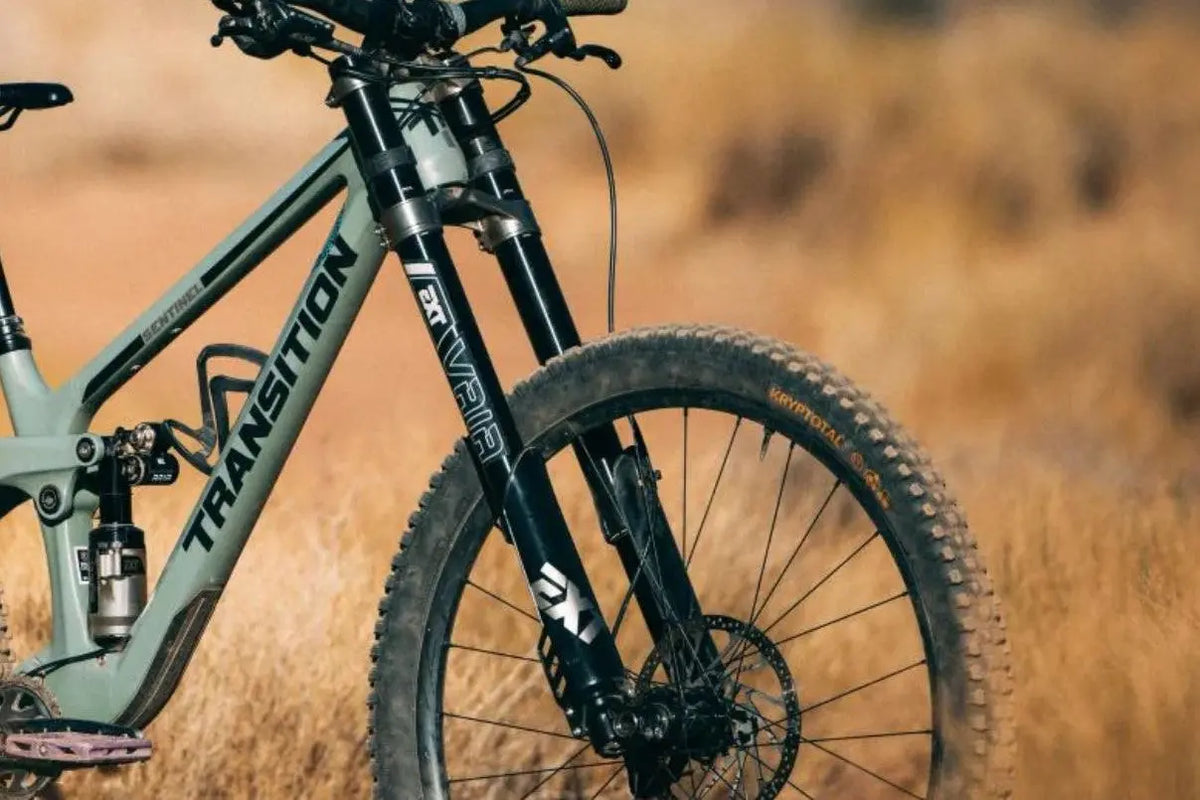
- Suspension. RockShox BoXXer World Cup fork, 203mm travel, with a Vivid R2C air shock giving over 9 inches of frame travel. The air package also saves nearly 2 lbs over the standard setup.
- Drivetrain. The Schlumpf High Speed Drive gives an 85T-equivalent chainring at the click of a heel, so you can keep pedalling meaningfully past 50 mph. Nothing else does this.
- Controllers. A Nucular FOC controller runs quieter, cooler and more efficiently than a generic unit, and can be tuned properly.
The bikes themselves
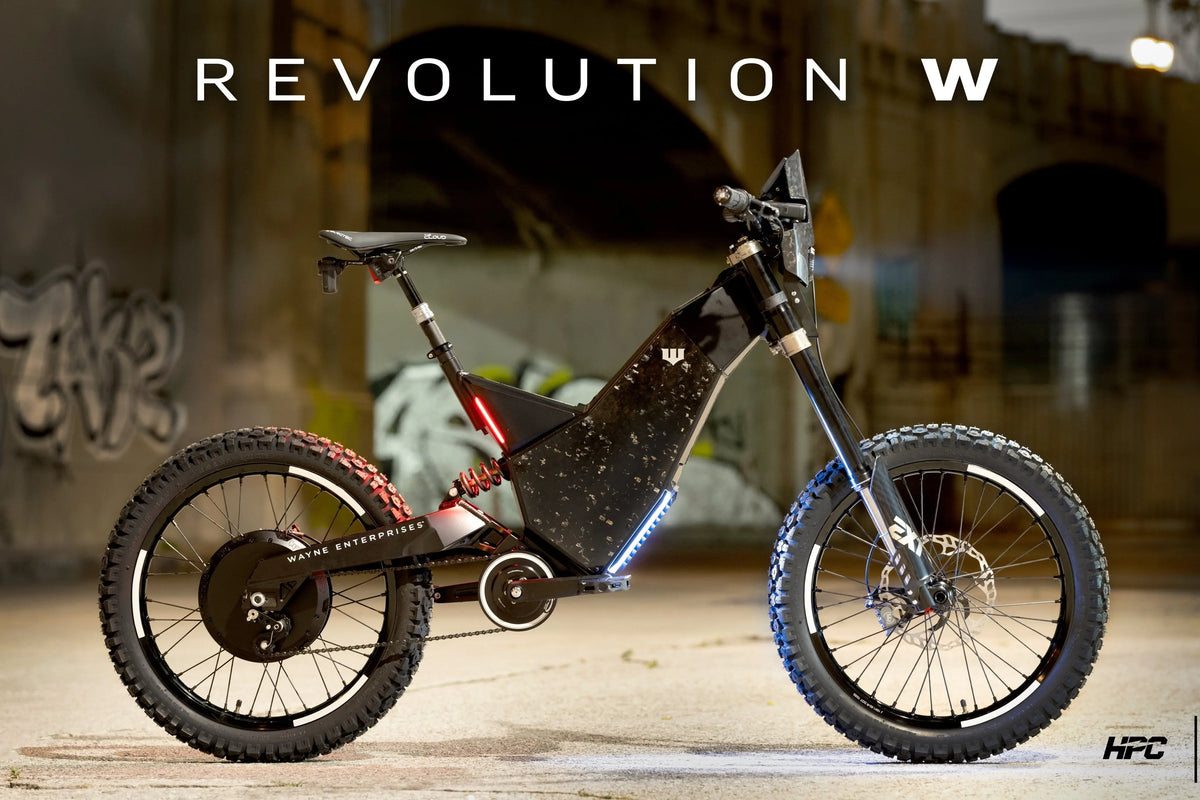
Revolution W — $29,995. Our flagship, and the most expensive bike we build. Hand-built and highly exclusive.
Revolution X — $15,000. 6,000W standard with a 7,000W option capable of 60+ mph, BoXXer World Cup fork, MT7 brakes, Schlumpf drive.
Trailblazer Pro — $13,000. The pinnacle of the Trailblazer line, hand-built full carbon.
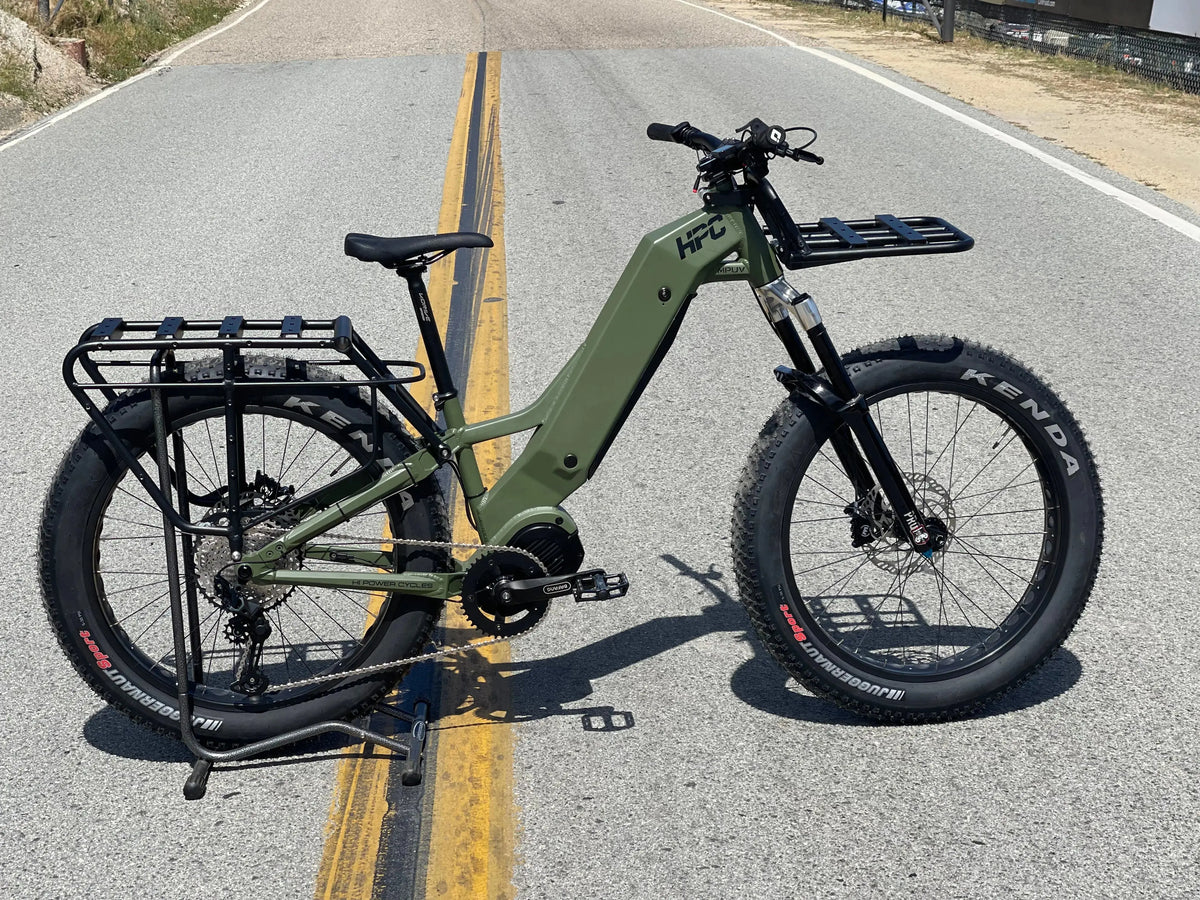
Trailblazer AT. Fat-tyre enduro for terrain most bikes cannot reach.
What the money does not buy
Worth being straight about this, because the honest version is more useful than the sales version.
An expensive e-bike does not make you a better rider. It will not make a moderate trail more fun than a well-chosen $7,000 bike would. And for commuting, a premium high-power machine is objectively the wrong tool — heavier, harder to park, and legally restricted from paths a modest bike can use freely.
The gap between a $3,000 e-bike and a $10,000 one is large and easy to feel. The gap between $10,000 and $30,000 is real but far more specialised — it buys exclusivity, extreme capability and the last increments of performance, which matter enormously to some riders and not at all to others.
When it is genuinely worth it
A premium build earns its price when you are riding at the limit of what a cheaper bike can survive, when you ride enough miles that durability and serviceability compound, when you need capability that simply does not exist further down the range, or when you want something hand-built in small numbers and value that for its own sake.
That last reason is legitimate. People buy hand-made things because they are hand-made, and there is nothing wrong with it as long as nobody pretends it is a performance argument.
If you are weighing a high-end build, our guide to whether high-end e-bikes are worth it goes further, and how many watts you really need covers the power question.
Tell us how and where you ride and we will tell you honestly which bike fits — including when it is not the expensive one.
Comments